Atrium House East Ivanhoe, Melbourne home photos, Victoria residence design, Australian property pictures
15 April 2026
Architects: Di Bartolo Architects
Location: East Ivanhoe, Melbourne, Victoria, Australia
Photos by Timothy Kaye
Atrium House, East Ivanhoe, Vic, Australia
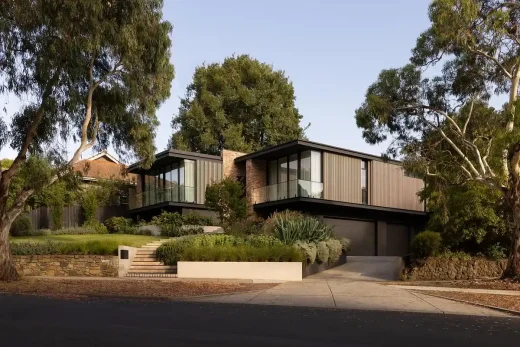
What began as a modest extension to a post‑war clinker brick house evolved into the creation of a new family home, shaped by the changing needs of a growing household and a desire for a place connected to lifestyle, landscape, and long‑term living. Rather than adding space, the project became an opportunity to reimagine the home – one that balances generosity with restraint.
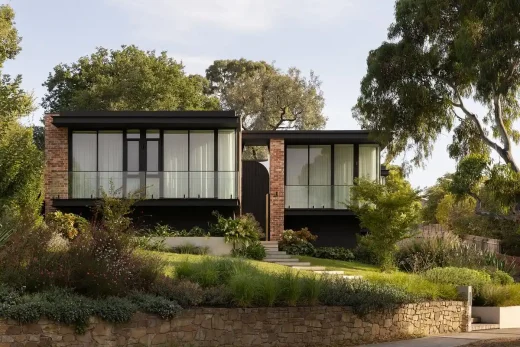
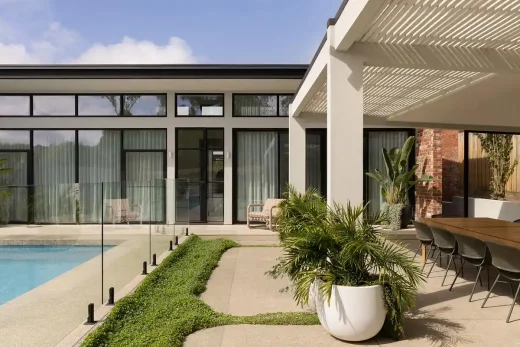
The house is conceived as a single‑level dwelling aligned with the rear alfresco and pool, allowing living spaces to open seamlessly to the north. A discrete garage below enables the main floor to sit on an elevated platform, creating a gentle rise from the street that guides visitors upward through the landscape and into the home. Entertaining plays a central role in the plan, with fluid connections between kitchen, dining, living and outdoor spaces supporting large family gatherings while maintaining calm, intuitive circulation.
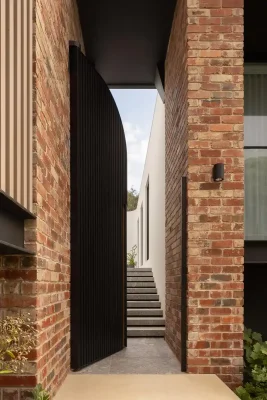
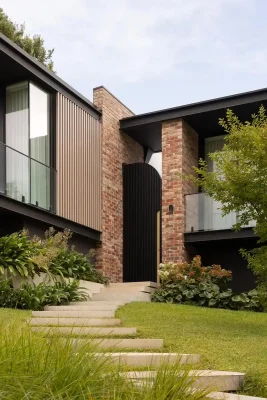
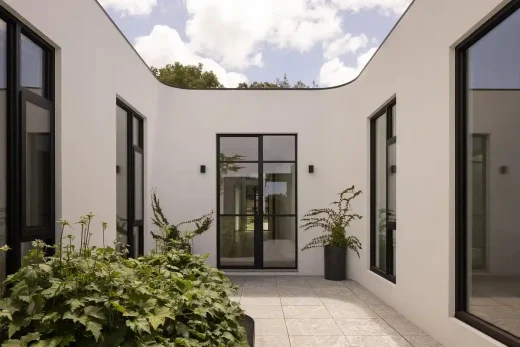
North‑facing glazing captures winter sun, deep eaves provide summer protection, and a raked ceiling draws soft southern light through high‑level windows. At the heart of the home, a planted internal courtyard forms a ceremonial entry sequence. Reclaimed clinker bricks, solar generation and water storage ensure the home is both environmentally responsive and experientially rich.
What was the core architectural vision behind Atrium House and how does it reflect Di Bartolo Architects design philosophy for residential projects?
What began as an extension to a post‑war clinker‑brick house shifted in ambition when the clients learned they were expecting a new addition to their family. With this change came an opportunity — not just to add space, but to reimagine the family’s entire living experience. At the heart of the redesign were three guiding pillars: the garden, the family, and the arrival experience. Together, they shaped the architectural language in ways that were both spatial and emotional. These ideas were grounded in our core belief that a home should be a safe, green and warm envelope — a nurturing sanctuary where a family can thrive, relax, entertain and play. The central atrium became the device that wove these themes together. Passing through the large metal courtyard door, moving alongside the reflective pond and garden bed, the transition feels almost ceremonial — a threshold where outside and inside overlap. Beyond the steel framed glazed entry door, the home immediately wraps you in its warmth, signalling a clear shift from public to private world. From here, the single‑level home unfolds with a sense of ease. Movement feels intuitive; light and landscape are constantly invited in; and the material palette brings a quiet groundedness to each space. In this way, the architecture meets the practical needs of family life while reflecting our broader philosophy: designing homes attuned to lifestyle, climate, and the subtle rituals that shape how people connect with each other and their environment.
How did the Unique characteristics of the Ivanhoe location influence the design and material choices for Atrium house?
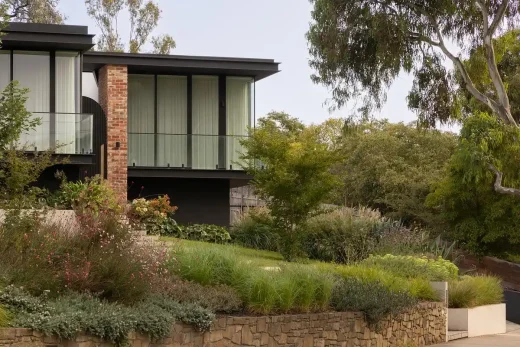
Set within leafy Ivanhoe — a suburb celebrated for its rich tapestry of architectural styles, from post‑war bungalows and Spanish Mission homes to Tudor influences and the iconic AV Jennings Art Deco houses — the site offered a strong contextual foundation for the new design. Mature gardens, expansive lawns and established trees are hallmarks of the area, and these qualities naturally aligned with our broader design pillars of the garden, the family, and the arrival experience introduced in the first answer. The previous clinker‑brick home became an important reference point rather than something to erase. We reclaimed and reused its original bricks, echoed its batten‑eave detailing, and leaned into the Australian Moderne blade‑wall language that forms part of the suburb’s later architectural history. These gestures embedded the new home in the lineage of its place while supporting our principle of crafting a safe, green, warm envelope that feels both familiar and renewed. The surrounding treetops shaped the placement and proportion of windows, inviting nature deep into the interior and reinforcing the home’s connection to its landscape. The site’s orientation allowed for expansive north‑facing glazing that opens the living areas to the alfresco and pool zone, while a raked ceiling and high south‑facing windows draw soft, ambient light throughout the day. Together, these responses ensure the home feels grounded in its environment — a contemporary expression of Ivanhoe’s architectural legacy, filtered through the lens of family life, light, and landscape.
Can you elaborate on the collaboration between Di Bartolo Architects and Alternative Construction, and how the partnership contributed to the projects success?
Just as the design was shaped by the garden, the family, and the arrival experience, the delivery of the home required a construction approach that could honour these ambitions with precision. From the outset, the project demanded a balance between meaningful architectural expression and the practicalities of structure and buildability. Our collaboration with Alternative Construction became essential in refining this balance. Together, we rationalised the structural system to ensure that every decision supported both performance and value for the client. This led to the adoption of a lightweight ground floor structure anchored by a Hebel PowerFloor substrate — a solution that provided the thermal stability, acoustic comfort and efficiency the home required, without the cost and rigidity of a traditional concrete slab. The project’s emphasis on lightness, thermal performance and environmental responsiveness meant that details such as insulation strategy, solar integration, and construction sequencing needed to be executed with absolute clarity. Alternative Construction brought a level of craftsmanship and problem‑solving that aligned perfectly with the architectural intent. Their precision allowed the home’s defining qualities — its warmth, environmental efficiency, and gentle connection to landscape — to be realised with integrity. The result is a dwelling that is not only technically robust but experientially refined, embodying the same values expressed in its design: a safe, green, warm envelope for family life to thrive within.
What kind of living experience was envisioned for the residents of the atrium house, and how does the design facilitate this?
The home was conceived as a place where everyday family life and generous entertaining coexist with ease. The clients’ vibrant European family culture shaped a layout that prioritises seamless connection between the kitchen, dining, living and alfresco spaces — ensuring gatherings flow effortlessly from indoors to outdoors. Soft, filtered light, intuitive circulation and the continual presence of landscape foster a sense of calm and welcome. Meanwhile, sustainable technologies and high‑performance systems provide comfort year‑round. The result is a home that supports both intimate family moments and lively celebrations with equal grace.
What was the house/land like before this project?
The original site held a modest post‑war clinker‑brick dwelling. While the project began as an extension, it soon became clear that a complete redesign would better serve the family’s evolving needs. Key materials — particularly the face bricks — were salvaged and thoughtfully reincorporated into the new architecture, honouring the site’s legacy while reducing waste
What was the homeowner’s brief for the project/what was important to them in this process?
The clients sought a generous family home accommodating four children with two dedicated bathrooms, plus a master suite, large open living areas, a lounge, study, and robust entertaining capability. Sustainability, comfort, and long term efficiency were equally central — from solar generation to water storage, hydronic heating, and high level insulation.
What were some of the special design considerations of the project? Were there any major obstacles that you needed to overcome?
One of the key challenges was reconciling the client’s desire for single‑level living with the natural slope of the site. Rather than resist this condition, the design embraces it by positioning the garage beneath the main floor, allowing the primary living spaces to sit on an elevated platform aligned with the natural ground level of the rear alfresco and pool area. A critical consideration was ensuring the street‑facing façade did not read as a house perched above a garage, but instead felt as though the landscape itself gently rises to meet the architecture — lifting visitors gradually into the home.
What was your inspiration for the design?
The design draws from a fusion of influences. Australian Moderne precedents — particularly Ken Woolley’s Baudish House — informed the close relationship between building and landscape, where living spaces are immersed in treetops and light. This is complemented by a more ceremonial European sensibility in the entry sequence: passing through a grand door, ascending granite steps, and arriving within a private courtyard. Together, these influences shape a home that feels both grounded in place and quietly uplifting in experience.
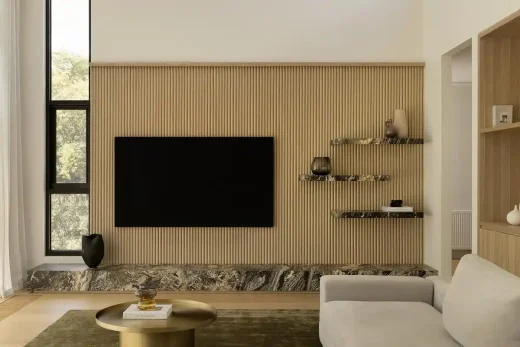
Why were particular colours/materials used? What kind of atmosphere were you aiming to create?
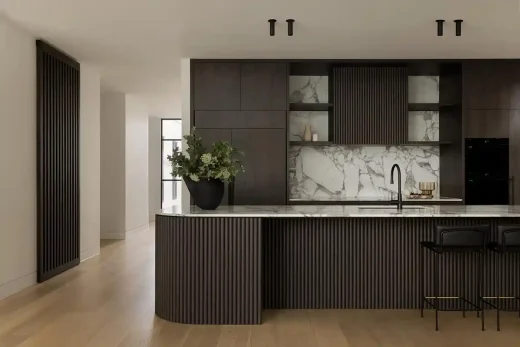
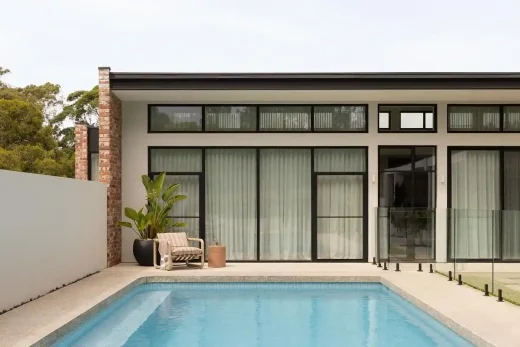
The defining material of the project is the reclaimed clinker brick. These bricks were conceived as vertical monuments — a respectful memory of the original home — intersected by strong horizontal layers of steel, timber, and glass. This restrained palette sits comfortably among the surrounding gum trees, balancing solidity with lightness. The basement garage is rendered black to recede into shadow, creating the illusion of a floating floor above. Internally, blonde natural timber flooring and select joinery elements introduce warmth and authenticity, grounding the home emotionally and materially. Refined architectural lines and generous glazing bring brightness and clarity, shaping an atmosphere of calm sophistication, punctuated by moments of drama — particularly within the entry sequence and beneath the raked ceiling of the main living spaces.
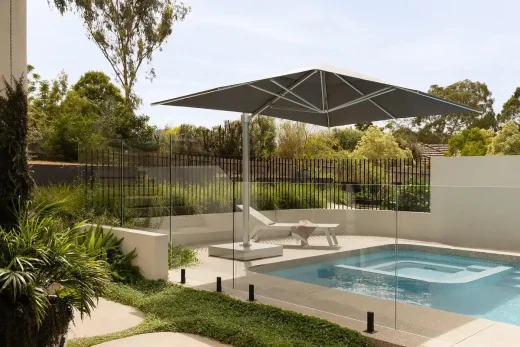
What is your favourite part of the designed/built space?
The internal courtyard and dramatic entry sequence remain the most compelling moments — a carefully choreographed threshold that transitions visitors from the suburban street into a serene inner world. Within the home, the north‑facing living and kitchen spaces, capped by a raked ceiling, capture subtle southern light through highlight windows while opening directly to the alfresco and pool to the north. Together, these elements create a daily theatre of shifting light, landscape, and atmosphere.
What environmental considerations are there in the design? Have any special materials/environmentally friendly products/designs been implemented?
The home integrates extensive sustainability measures, including: • 22kw solar system including batteries • 20,000 litre water storage • High level wall and roof insulation • Hydronic and individually zoned reverse cycle systems • Reuse of original brickwork • Hebel PowerFloor for thermal mass and comfort • Electrified heating, cooling, hot water and hydronic systems. Together, these strategies significantly reduce carbon emissions and enhance year round liveability.
Atrium House in Victoria, Australia – Building Information
Architecture: Di Bartolo Architects – https://www.dibartoloarchitects.com
Shackelford Consulting Engineers
Alternative Construction
Completion date: 2024
Building levels: 2
Photography: Timothy Kaye
Atrium House, Melbourne, Victoria images / information received 150426
Location: Ivanhoe, Melbourne, Victoria, Australia.
Melbourne Property Designs
Melbourne Architecture Designs – chronological list
Melbourne Architectural News
House in a Garden, Kew, Victoria
Architecture: Edition Office
photo : Maxime Delvaux
Tara Avenue Residence, Kew, Victoria
Design: Chan Architecture Pty Ltd, APC Build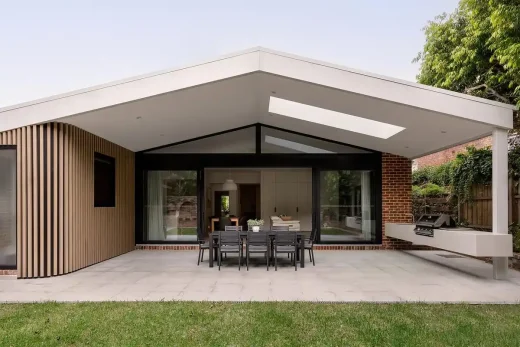
photo : Elise Scott
Melbourne Architecture
Melbourne Architect – design studio listings
+++
Victoria Houses
Australian Houses
Tree House in Kew
Myer Bourke Street
Australian Architecture
Australian Architect
Comments / photos for the Atrium House in Victoria design by Di Bartolo Architects page welcome.