I M Pei Architect Archive: MIT Museum News
23 June 2026
MIT MUSEUM ANNOUNCES LANDMARK ACQUISITION OF ARCHITECT I. M. PEI’S ARCHIVE
The promised gift from Pei Cobb Freed & Partners spans Pei’s storied sixty-year career, including unique archival artifacts from sixty of the architect’s most influential projects.
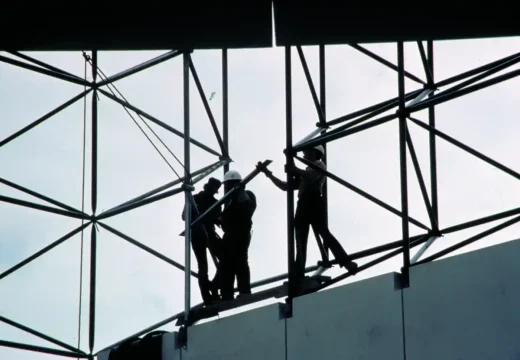
JFK Library building construction: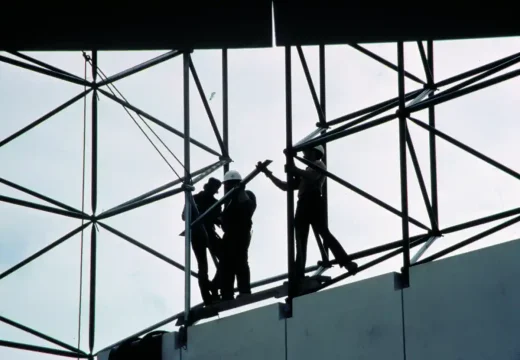
All Images © Pei Cobb Freed & Partners unless stated otherwise
Cambridge, MA, June 23, 2026 — The MIT Museum announces the promised transfer of the project archive of I. M. Pei, a significant collection representing his work for his New York architecture firm Pei Cobb Freed & Partners. The landmark donation will make Pei’s alma mater, the Massachusetts Institute of Technology (Bachelor of Architecture, 1940) the home of the single largest collection of his work and the new leading hub for research and study of the prolific Pritzker Prize-winning architect.
The I. M. Pei archive includes approximately 1,500 rolls of architectural drawings, 50 architectural models, and 1,000 linear feet of manuscripts and other archives spanning more than sixty projects across I. M. Pei’s decades-long career. With this gift, the MIT Museum will become the leading steward and resource for the student and professional work of I. M. Pei, further bolstering the museum’s extensive architecture collections. After the drawings and archives are processed and catalogued, projected for Fall 2028, MIT and the MIT Museum plan to present a robust program of collaborative teaching, research, exhibition, and public engagement efforts to bring unprecedented access to the architect’s legacy.
Louvre Pyramid rendering, Paul Stevenson Oles, 1984: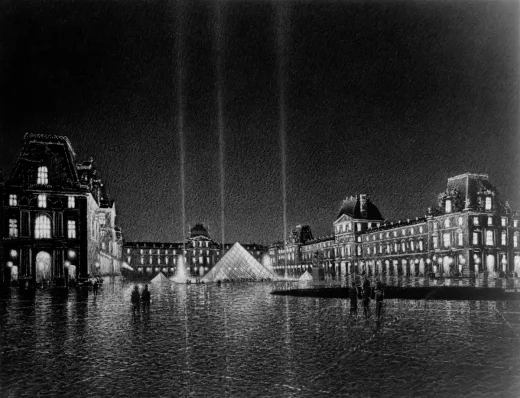
The archive will include never-before-seen drawings and documents from Pei’s career, including the Louvre Museum Modernization in Paris, France, four significant buildings on the MIT Campus in
Cambridge, Massachusetts (Green Building, Dreyfus Building, Landau Building, and Wiesner Building), the John F. Kennedy Presidential Library and Museum in Boston, Massachusetts, the Rock and Roll Hall of Fame in Cleveland, Ohio, and many more.
The Mark R. Epstein (Class of 1963) Director, MIT Museum Michael John Gorman, said: “This landmark donation marks the homecoming of I. M. Pei to MIT. From his early designs of the John F. Kennedy Presidential Library and Museum and the Louvre Pyramid, to architectural drawings for four of our campus’s most important buildings, this archive showcases and celebrates Pei’s lifetime of achievements and impact on the built environment. The MIT Museum is thrilled to steward his legacy and, together with MIT’s School of Architecture and Planning, establish a global hub for the study of I. M. Pei. We are deeply grateful to Pei Cobb Freed & Partners for entrusting the Pei archive to MIT, bringing Pei’s archive ‘home’ to MIT.”
NCAR topographic site plan 1967-08: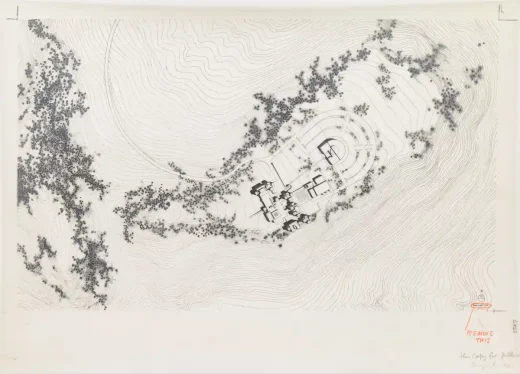
In addition to his legacy as a celebrated architect, Pei was a valued member of the MIT community. His Institute professors, recognizing Pei’s talent and potential, preserved an unusually large number of his student drawings as examples of outstanding student work; these works are now held in the Museum’s Architecture Collection and include drawings from classroom architecture assignments, figure drawing classes, and his final thesis project. Pei remained involved and committed to the Institute, serving on the Corporation and as an honorary member of the Council for the Arts at MIT. I. M. Pei left a visible mark on the MIT campus, designing the Cecil and Ida Green Building for Earth Sciences (Building 54), the Camille Edouard Dreyfus Chemistry Building (Building 18), the Ralph Landau Building for Chemical Engineering (Building 66), and the Wiesner Building (Building E15, the original home of the MIT Media Lab).
The MIT Museum’s Architecture Collection documents the evolution of architectural education and practice in the United States. Originating with MIT’s pioneering architecture program, founded in 1867, the collection was built from teaching materials assembled by educator William Robert Ware, including professional drawings and student work. Today the collection spans works from the sixteenth century to the present, with particular strengths in nineteenth- and twentieth-century architectural education and the professional work of MIT alumni and faculty. With the announced promised transfer from Pei Cobb Freed & Partners, the MIT Museum will become the single largest repository of work by Pei in the world.
Office of I. M. Pei & Associates, pencil sketch of John F. Kennedy Presidential Library and Museum: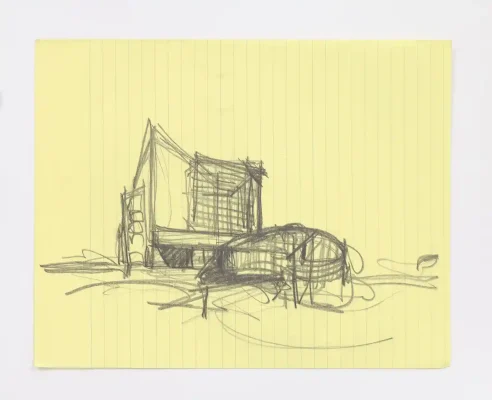
Jonathan Duval, Assistant Curator of Architecture at the MIT Museum and project lead on the Pei archive transfer, said: “From its founding in the 1860s, teaching architecture at MIT has been rooted in learning through drawings, objects, photographs, and other exemplars, many of which are in the collection of the MIT Museum. With the addition of I. M. Pei’s project archive, the MIT Museum will continue this tradition while activating historic materials in expanded ways. Pei’s architecture features innovations in structure and materials and makes use of striking modernist geometries while balancing contemporary cultural needs with a deep understanding of historical precedent—this is an approach to design that is still relevant and instructive today. Pei’s prominence as one of the most important, recognizable architects of the twentieth century presents exciting opportunities for public engagement through programs and exhibitions that activate the archive, celebrate Pei’s legacy, and make his architectural sensibilities meaningful and engaging to a wide range of audiences.”
Sketch of the Louvre Pyramid by I. M. Pei: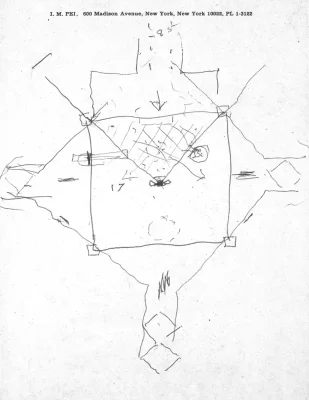
Hashim Sarkis, Dean of the School of Architecture & Planning, MIT, said: “Pei’s partner, the late architect Henry Cobb, once spoke to me about how important MIT was in I. M. Pei’s life and career. Pei came to the United States from China to study architecture and found at MIT a place where he could belong. It was also at MIT that he received one of his first major nonresidential commissions—the Cecil and Ida Green Building for Earth Sciences (1962)—beginning a long relationship with the Institute and its campus. There is something deeply meaningful about seeing this archive come to MIT, where so much of that journey began. It will become a living resource for our students, offering direct access to the drawings, models, and ideas of an architect whose work continues to shape the way we think about cities, institutions, and the public realm.”
Louvre Pyramid interior elevation 1986-03-18: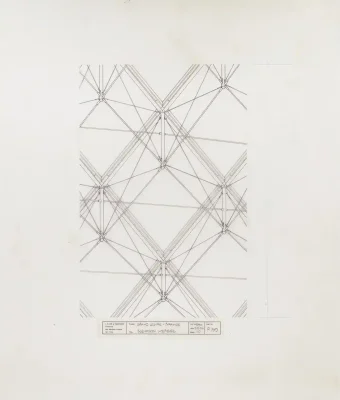
Keeril Makan, Vice Provost for the Arts, MIT, said: “MIT is proud to be the new home of this important collection of work by our esteemed alumnus, creating a global center for research on architect I. M. Pei. This gift cements the MIT Museum as the hub of Pei’s research, accessible to students in the School of Architecture and Planning and across MIT, as well as researchers from other institutions, and even the public, providing an unparalleled opportunity to be immersed in the history of Pei’s work. Our MIT List Visual Arts Center is housed in a building by Pei, and students take classes in his buildings throughout our campus. They will now engage with his archives that include designs for those buildings, works he created as a student, and his buildings across the globe, offering inspiration for future work.”
MIT Green Building construction 1963-10-07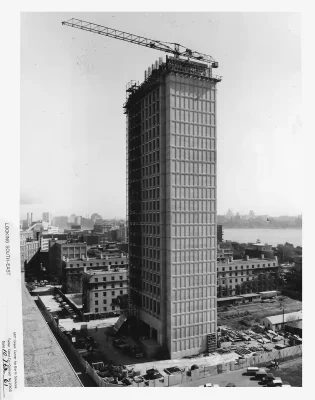
Li Chung (Sandi) Pei, son of I. M. Pei and Founding Partner of PEI Architects, said: “I could not be more pleased that my father’s archive will find its home at MIT—the institution that shaped his path in architecture and entrusted him with the design of four significant buildings on its campus. It feels profoundly right that the full record of his life’s work is returning to the place where it began. What makes this moment especially meaningful to me is that the MIT Museum understands the significance of this archive and the importance of its preservation. Their stewardship ensures that future scholars, students, and architects will be able to explore the full scope of my father’s work. That kind of access, that kind of care, is a gift to everyone who cares about architecture and the ideas that shape our world.”
José Bruguera, Partner, Pei Cobb Fried & Partners, said: “Pei Cobb Freed & Partners celebrated its 70th anniversary last year. There could be no better way to mark this milestone than to ensure the preservation of I. M. Pei’s project records for future generations of students, scholars, and architects. We are delighted to place his archive in the care of the institution that nurtured him, first as a student and then as a visionary designer who helped shape the MIT campus.”
JFK Library red sketch 1973-12-27: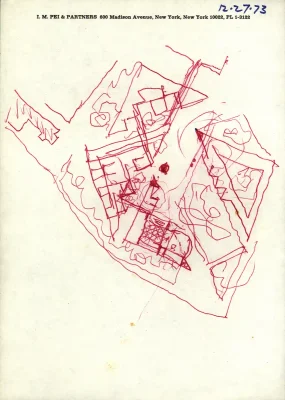
+++
Major I. M. Pei Buildings
Highlighted Projects in the I. M. Pei Project Archive Include:
● Earth Science Building (Green Building), MIT, Cambridge, MA
● Dreyfus Chemistry Building, MIT, Cambridge, MA
● John F. Kennedy Presidential Library and Museum, Boston, MA
● Louvre Museum Modernization, Paris, France
● Dallas City Hall, Dallas, TX
● Society Hill, Philadelphia, PA
● National Gallery of Art East Building, Washington, DC
● Landau Chemical Engineering Building, MIT, Cambridge, MA
● Wiesner Building, MIT, Cambridge, MA
● Bank of China Tower, Hong Kong
● Four Seasons Hotel, New York, NY
● Rock & Roll Hall of Fame, Cleveland, OH
+++
MIT Green Building McDermott Eastman Court: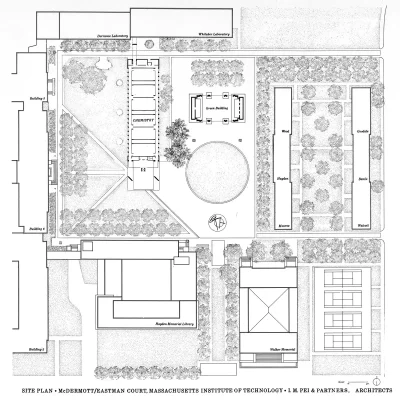
MIT Museum
The MIT Museum welcomes all to participate in MIT’s unique culture of problem-solving and playful creativity, bringing together science, technology, art, and design in surprising ways to explore potential futures.
In addition to exhibitions, programs, a maker hub and learning labs, the museum invites visitors to take part in ongoing research while demonstrating how science and innovation will shape the future of society. In October 2022, a reinvented MIT Museum opened in a new location in the heart of Kendall Square in Cambridge, MA.
Highlights of the Museum include freshly conceived exhibitions featuring objects from the Museum’s collections of over 1.5 million objects, along with loans of art and other objects; the Lee Family Exchange event space for public dialogue and conversation; the hands-on Heide Maker Hub, where audiences can create and invent; and an expanded MIT Museum Store.
The MIT Museum is open daily 10:00 a.m. – 5:00 p.m.
For more information, including accessibility and amenities, please visit mitmuseum.mit.edu
Address: MIT Museum, Gambrill Center, 314 Main Street (MIT Building E28), Cambridge, MA 02142.
Located next to the Kendall/MIT MBTA Red Line stop at the new Kendall Gateway to the Massachusetts Institute of Technology (MIT) Campus. Museum Director, Michael John Gorman.
MIT Green Building construction 1963-09-05: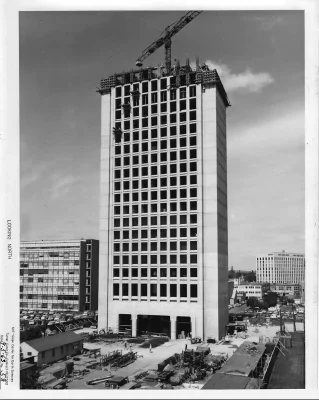
Pei Cobb Freed & Partners
Pei Cobb Freed & Partners is an international architectural firm known for some of the world’s most recognized landmarks. Across seven decades of practice, the firm has completed over 250 building and planning projects in more than 100 cities around the world, a portfolio of work exceptionally diverse in scale, program, purpose, and expression. Clients range from major corporations, private developers, and public authorities to educational, cultural, and religious institutions.
I M Pei Architect
I. M. Pei founded the firm in 1955 with Henry N. Cobb and Eason H. Leonard, providing vigorous leadership until his retirement in 1990. Now in its fourth generation, the partnership—led by Michael W. Bischoff, José Bruguera, and Kate Bojsza—remains rooted in the shared values that have informed its work from the start: first, a conception of architecture and planning as an art of placemaking, embodying a concern for the quality of public space and public life; and second, a commitment to the craft of building, emanating from a belief that thoughtful use of materials and careful attention to detail are indispensable to the creation of a meaningful and responsible built environment. Sustainability, in its social and technical manifestations, is a key aspect of both of these concerns, as evidenced by a roster of LEED-accredited professionals and a portfolio of projects shaped by consideration of climate, energy and water efficiency, daylight, and environmental quality. These projects span from one of the earliest AIA Top Ten Green Projects through current work at the level of LEED Platinum.
In addition to numerous awards for the totality of its practice, the firm’s individual built works have received more than three hundred major design awards, including twenty-five AIA Honor Awards and three AIA Twenty-five Year Awards. Detailed information about the firm and its work can be found at pcf-p.com
+++
I. M. Pei: Life Is Architecture
M+ Exhibition, Hong Kong, China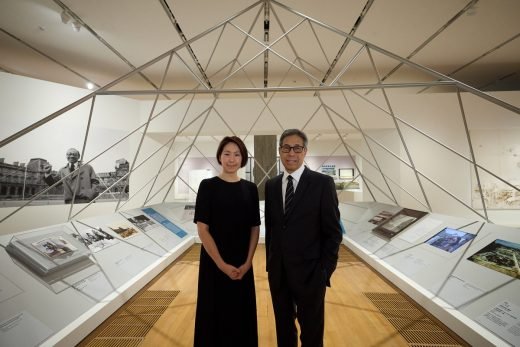
photo courtesy of M+ / architects office
I. M. Pei: Life Is Architecture
Louvre Pyramid Paris: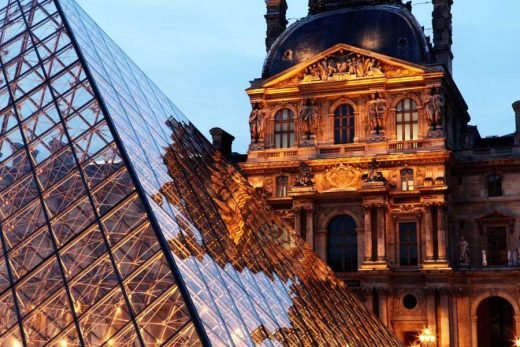
photo © Steven Powell, 2010
I. M. Pei receives the Royal Gold Medal for architecture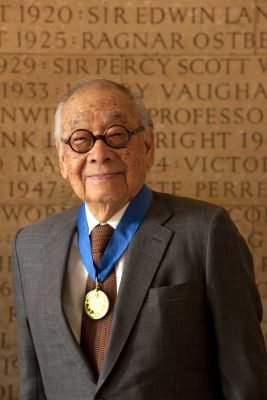
photo from RIBA
I M Pei wins RIBA Gold Medal 2010
+++
I M Pei – Key Projects
Buildings by I M Pei, alphabetical:
Bank of China Tower, Hong Kong
Date built: 1990
Design: I.M. Pei & Partners, Sherman Kung & Associates Architects Ltd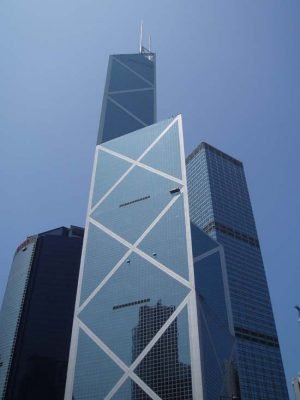
image © Andrew McRae
367m high skyscraper : tallest building in Hong Kong and Asia from 1989-92, until the completion of Central Plaza
Bank of China Hong Kong
Grand-duc Jean Modern Art Museum, Luxembourg
Date built: 2006
Luxembourg Architecture : Museum Building
Herbert F. Johnson Museum of Art, Cornell campus, Ithaca, New York, USA
Date built: 1973
Design: I M Pei & Partners, Architects
Monumental concrete building
New York State Architecture Designs
Jacob K. Javits Convention Center, 655 West 34th Street, New York, USA
Date built: 1986
Design: I M Pei & Partners, Architects
Javits Convention Center New York
JFK Airport Terminal 6, New York, USA – Demolition Opposition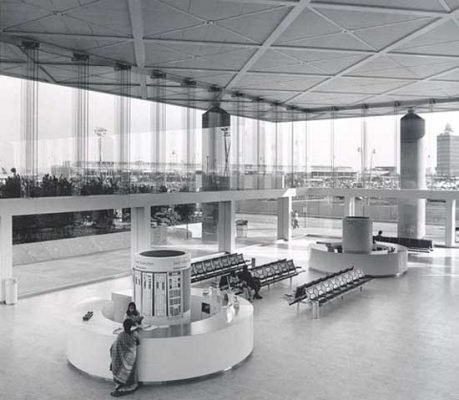
photo from PCFP
JFK Airport Sundrome
John Hancock Tower, Boston, Massachusetts, USA
Date built: 1976
Boston Buildings
790ft high, 60 storeys
Hancock Place : tallest building in New England
Museum of Islamic Art, Doha, Qatar
Date built: 2008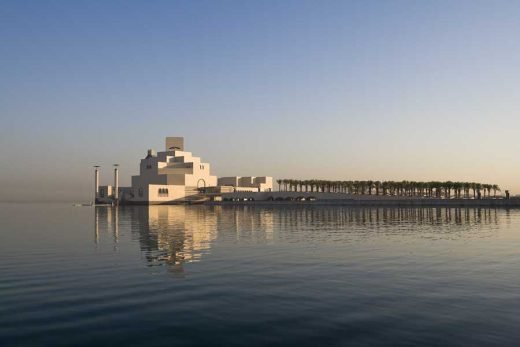
photo : Courtesy of the Museum of Islamic Art
Museum of Islamic Art Doha
Pyramide du Louvre, Paris, France
Date built: 1989
Design: Pei Cobb Freed & Partners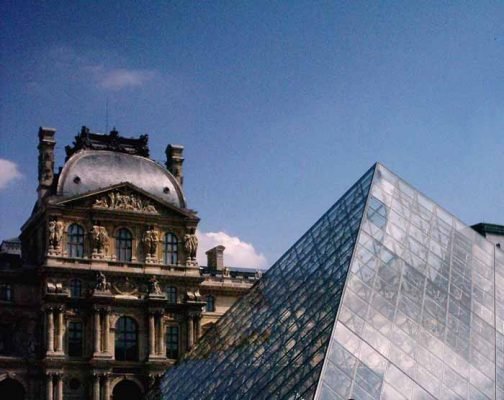
photo © Adrian Welch
The Louvre Pyramid
Ieoh Ming Pei : Pritzker Prize architects winner in 1983
+++
Modern Architecture Studios
New York Architects Offices
Hong Kong Architecture
New York Architecture
Architecture Studios
Comments / photos for the I M Pei Architect Archive, MIT Museum architecture page welcome
Website: www.pcf-p.com