Natural History Museum Abu Dhabi buildings architect, Qasr al Hosn Fort, Mecanoo UAE architecture images
Natural History Museum in Abu Dhabi, UAE
post updated 20 July 2026 + 17 May 2026
Design: Mecanoo
Location: Qasr al Hosn Fort, Abu Dhabi, UAE
Photography by Ossip Architectuurfotografie
Design Concept
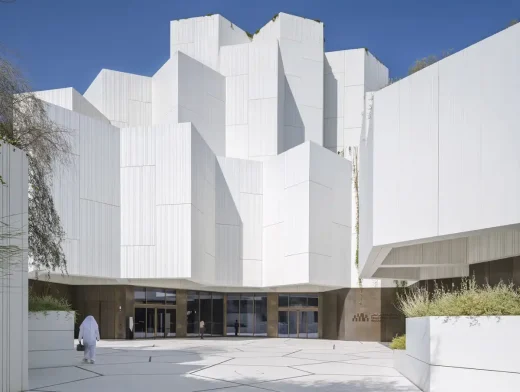
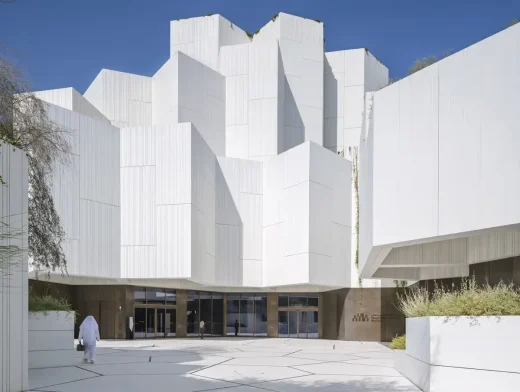
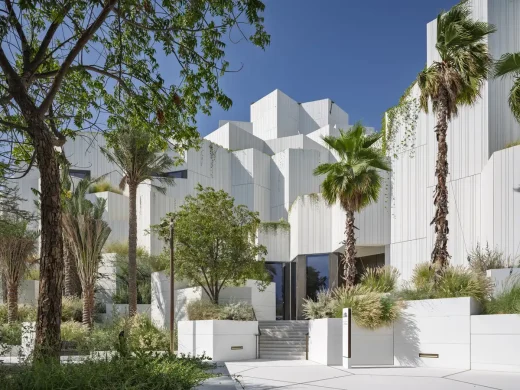
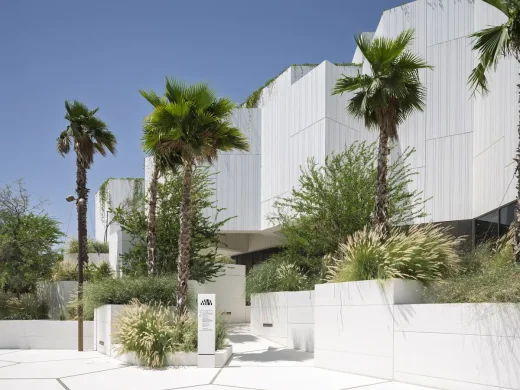
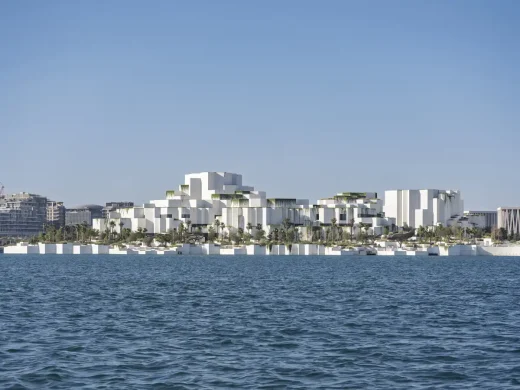
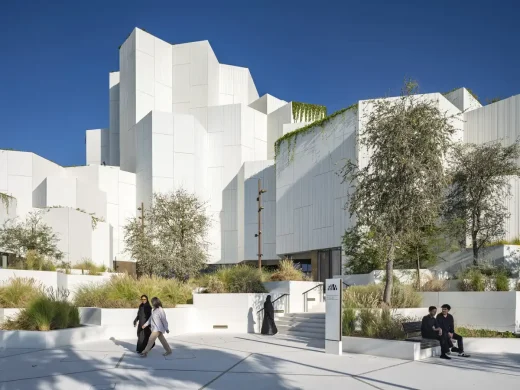
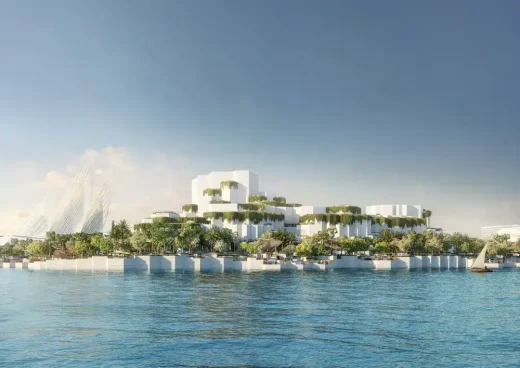
The concept for the Natural History Museum Abu Dhabi is rooted in the meeting of water and earth, recognising this ever-changing boundary as a place of origin, movement and transformation. Rather than designing a singular architectural object, the museum is conceived as a landscape shaped by natural forces, where architecture and terrain become inseparable. Inspired by the geological formations and wadis of the region, the building emerges from the landscape as a series of sculpted volumes shaped by time, allowing the experience of natural history to begin before visitors enter the museum itself.
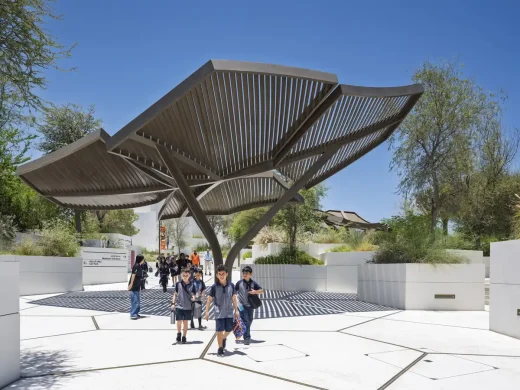
Pentagonal patterns, derived from the cellular structures found in nature, establish a strong relationship between building and landscape. This geometry creates cohesion across the project while expressing the museum’s ambition to reveal the underlying systems and patterns that shape the natural world, from microscopic organisms to geological formations.
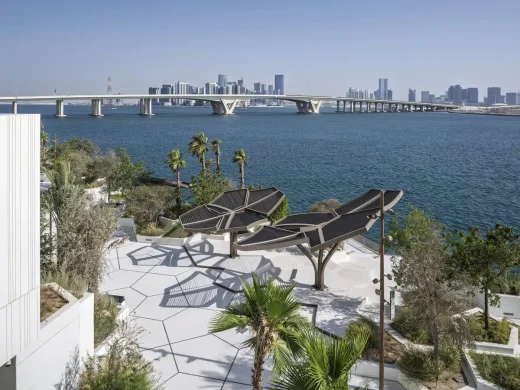
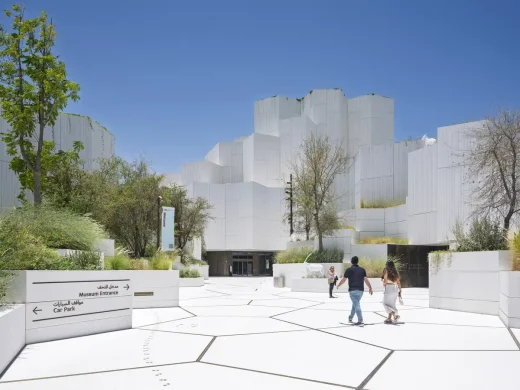
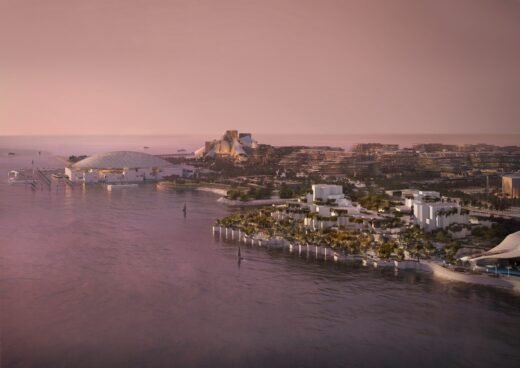
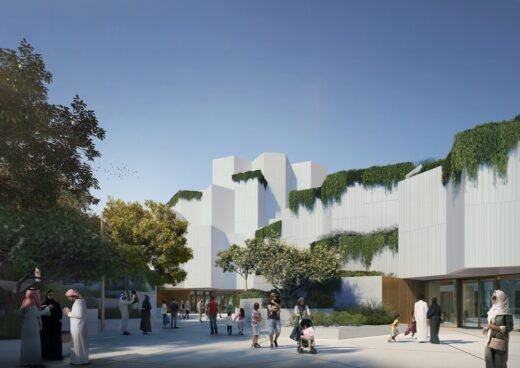
Three public pathways flow through the landscape, connecting the waterfront with the surrounding cultural institutions of Saadiyat Island. Open to everyone without a ticket, these routes transform the museum into an extension of the public realm, where architecture, landscape and everyday urban life intersect. Visitors are invited to wander, pause, observe and engage with the museum’s narratives through terraces, shaded passages and public spaces before entering the galleries.
Nuno Fontarra, Architect/Partner at Mecanoo explains: “Our goal was to explore the relationship between the museum and the city, between architecture and landscape, integrating the experience of the museum with the experience of living in the city.” This ambition defines the Natural History Museum Abu Dhabi as more than a building containing knowledge; it becomes an extension of the public realm, where the boundaries between the museum, the landscape and urban life are dissolved.
Arrival Sequence
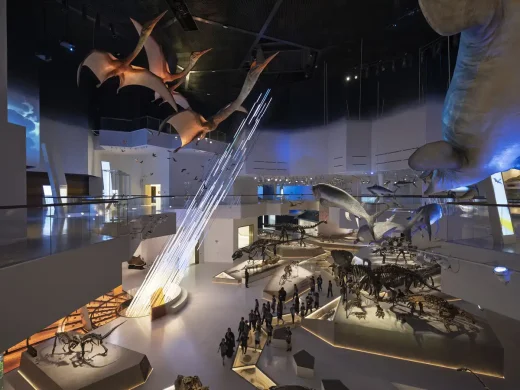
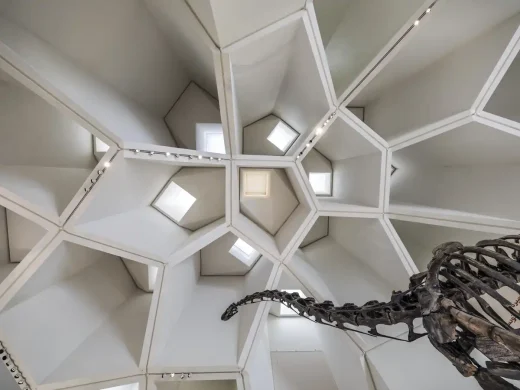
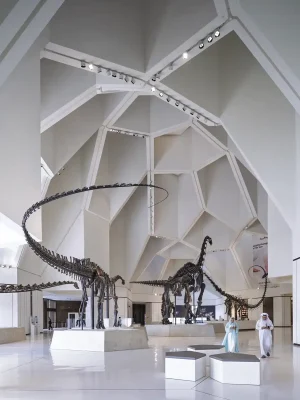
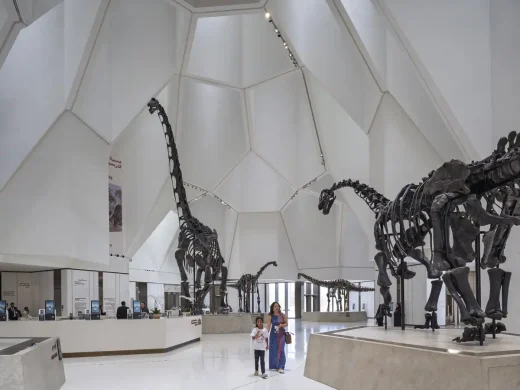
The interior experience begins with the entrance lobby, conceived as a monumental central space that introduces visitors to the scale and ambition of the Natural History Museum Abu Dhabi. The lobby is not simply a point of arrival, but a dramatic threshold between the city, the landscape and the world of natural history contained within. Its monumental character provides a powerful backdrop for the display of the museum’s large-scale specimens, including the dinosaurs, creating an immediate sense of wonder and discovery.
The space appears as if it has been subtracted from within the exterior geometry of the building, as a void carved into the massive landscape-like form. Deep skylights penetrate the architectural volume, capturing and directing natural light down into the interior, creating a controlled connection between the exterior landscape and the museum experience. The interplay of shadow, daylight and the textured surfaces of the space reinforces the feeling of being inside a geological formation, where architecture becomes a continuation of the natural processes that inspire the building.
In this way, the entrance lobby becomes more than a circulation space; it acts as the symbolic heart of the museum. It establishes the relationship between architecture and nature from the moment of arrival, preparing visitors for a journey of exploration where the building itself becomes part of the story of the Earth.
Museum Experience
The exhibition unfolds as a journey through the history of the natural world, telling the story of our planet from the origins of the universe and the Big Bang to the challenges facing humanity today and in the future, including the growing climate change crisis. Rather than presenting knowledge as a collection of isolated displays, the museum creates a continuous narrative that allows visitors to understand the evolution of life, the forces that shaped the Earth and the delicate balance of ecosystems.
Organised around a central courtyard, the exhibition sequence offers visitors both a guided chronological journey and the freedom to create their own paths of discovery. The spatial organisation accommodates different modes of exploration, where visitors can follow the storyline of natural history from beginning to end or move between galleries according to their own interests and curiosity.
The largest gallery establishes this experience through a powerful moment of arrival and surprise, echoing the monumental character of the entrance lobby. This vast gallery creates a dramatic encounter with some of the rarest dinosaur specimens ever discovered, creating an immediate connection between visitors and the deep history of life on Earth.
Shared Knowledge
The Natural History Museum Abu Dhabi reflects a broader ambition for the role of the modern museum: to open its doors, move beyond the traditional institutional image associated with cultural buildings and become an active part of everyday city life. Rather than functioning as an isolated monument dedicated to preservation, the museum is conceived as an accessible public space that connects the community, scientific knowledge and professionals working at the forefront of research.
In this sense, the museum becomes a bridge between society and science, creating opportunities for dialogue, learning and exchange. Its role extends beyond communicating knowledge; it is a platform where knowledge is shared, questioned and continuously expanded. The history of scientific discovery has always been driven by collaboration and the exchange of ideas, and today science operates as a global network built on the collective contribution of researchers and communities around the world.
Materiality and Sustainability
Sustainability is embedded in the design from the earliest stages, drawing inspiration from the principles of vernacular architecture found across the region. Thick building masses, carefully controlled openings and shaded outdoor spaces inform a passive design strategy that responds to Abu Dhabi’s climate while reducing heat gain. The building’s substantial mass provides natural thermal insulation, contributing to a comfortable interior environment with reduced energy demand. Material choices further support the project’s environmental ambitions.
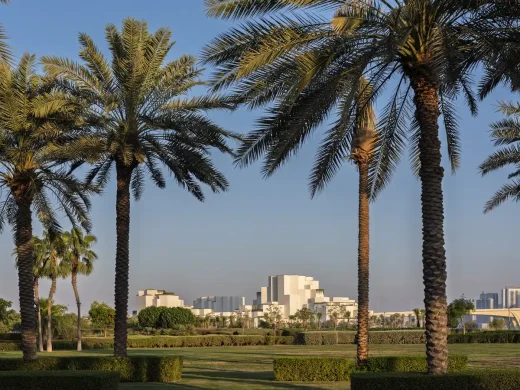
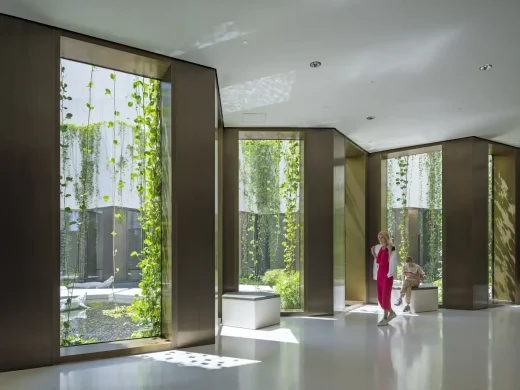
The primary structure combines concrete and steel, while the façades are predominantly constructed from ultra-high-performance concrete (UHPC) manufactured locally, reducing transport-related emissions. Landscape also plays an important environmental role. Interior planters and surrounding greenery create additional thermal buffers that help mitigate solar heat gain, while sustainable irrigation systems minimise water consumption and support a resilient planting strategy adapted to the local climate.
Collaborative Design
Designed by Mecanoo in collaboration with EGIS, Broadway Malyan, Pascal+Watson and WAHO, the Natural History Museum Abu Dhabi is a new cultural and scientific destination on Saadiyat Island. Owned and operated by DCT (Department of Culture and Tourism) and developed by Miral, Abu Dhabi’s leading experience and entertainment developer, the museum contributes to Abu Dhabi’s ambition to position itself as a global centre for art, culture and science, forming part of Saadiyat Cultural District alongside Louvre Abu Dhabi, Zayed National Museum, the Abrahamic Family House and the future Guggenheim Abu Dhabi.
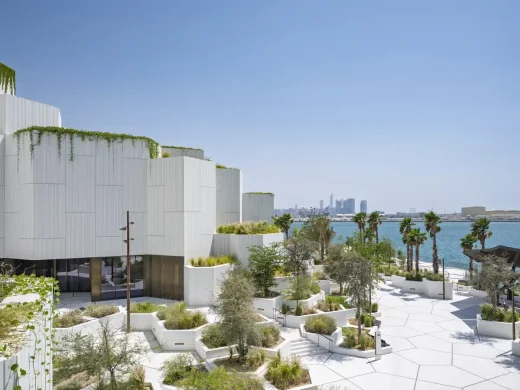
With a total area of 35,000 m², the Natural History Museum Abu Dhabi is the largest natural history museum in the Middle East. It is designed for both a broad public and the scientific community, combining exhibition spaces, educational facilities and research-oriented programmes within one accessible public institution.
Natural History Museum Abu Dhabi, UAE – Building Information
Client: DCT (Department of Culture and Tourism Abu Dhabi)
Address: Jacques Chirac St – Al Saadiyat Island – SDN1, Abu Dhabi, United Arab Emirates
Design: 2020 – 2022
Realisation: 2022 – 2025
Design Team: Mecanoo, Egis Group, Broadway Malyan, Pascall+Watson, Waho Landscape Architects, Plan A Consultants, EllisDon.
Developer: Miral
Main Contractor: Alec
Exhibit Design: Ralph Apelbaum, Barker Langham
Programme: 35,000 m2 museum on a 82,000 m2 site, including plaza, gardens and waterfront, galleries, display areas, café, education centre, laboratories, logistics and operations, public spaces, 7research and administrative facilities, multipurpose and event spaces.
Photography by Ossip Architectuurfotografie
Renders: RedVortex
31 Mar 2022
Natural History Museum, UAE
Covering an area of more than 35,000 sqm, lead architects Mecanoo designed the Natural History Museum Abu Dhabi to resonate with natural rock formations, reflecting the museum’s goal of improving understanding of and engagement with the natural world. Every element of the design uses geometry as an overriding theme, with pentagonal shapes resembling cellular structures.
Also playing an important role in the design are water and vegetation, potent symbols of life in the desert. The museum will join the diverse cultural institutions and museums in the Saadiyat Cultural District, which include Louvre Abu Dhabi and the upcoming Zayed National Museum and Guggenheim Abu Dhabi, as part of Abu Dhabi’s strategy to position the emirate as a centre for culture, arts, and creativity.
Abu Dhabi has unveiled plans for the Natural History Museum Abu Dhabi, which will feature some of the rarest wonders of natural history ever found. Visitors will travel on a 13.8-billion-year journey through time and space, which will include a thought-provoking perspective into a sustainable future for planet Earth. The new museum, currently under construction and due to be completed at the end of 2025, will be located in the emirate’s Saadiyat Cultural District, which is establishing itself as one of the world’s leading cultural centres.
A highlight of the new museum’s collection will be the world-famous ‘Stan’, a remarkable, mostly complete 39-foot-long (11.7 metres) Tyrannosaurus rex, which is one of the best preserved and most studied fossils of this iconic predator from the Late Cretaceous Period. Known by scientists around the world, years of scientific studies of ‘Stan’ have furthered our knowledge of countless aspects of T. rex. Now that ‘Stan’ has a new home at the Natural History Museum Abu Dhabi, this 67-million-year-old dinosaur will be in the care of expert scientists, and will continue to contribute to education and research and inspire future explorers.
‘Stan’ will be joined by an extraordinary Murchison Meteorite specimen, which famously crash-landed in Australia more than 40 years ago and has since revealed to scientists new information about the early solar system. Containing a huge range of organic ‘stardust’ compounds as well as pre-solar grains which formed over 7 billion years ago – long before our current solar system existed – the meteorite provides ancient insight into the very building blocks of life.
The museum’s collection will feature numerous significant artefacts as part of its compelling curatorial vision, as well as fascinating experiences being created by a dedicated team in Abu Dhabi, supported by strategic partnerships with world leading scholars and natural history experts.
Conceived and developed by the Department of Culture and Tourism – Abu Dhabi (DCT Abu Dhabi) in partnership with Miral, Abu Dhabi’s leading creator of destinations and experiences, the Natural History Museum Abu Dhabi will be a scientific research and teaching institution and an educational resource for learning about the evolving story of our planet, aiming to ignite a life-long passion for the natural world in visitors of all ages.
According to HE Mohamed Khalifa Al Mubarak, Chairman of DCT Abu Dhabi, nurturing awareness of how we are impacting the planet has never been more important.
Natural history has a new home in Abu Dhabi. A new museum which tells the story of our universe through some of the most incredible natural wonders known to mankind. These are awe-inspiring gifts from nature that we are proud to share with the world – unlocking millions of years of knowledge to not only advance scientific discovery but to inspire our children to protect our planet’s future, said HE Al Mubarak. As we nurture a new generation of global advocates that are incredibly curious and passionate about natural history, we are fulfilling our vision to enrich lives and make Abu Dhabi the place for research, collaboration and discovery.
The museum will join the diverse cultural institutions and museums in the Saadiyat Cultural District, which include Louvre Abu Dhabi and the upcoming Zayed National Museum and Guggenheim Abu Dhabi, as part of Abu Dhabi’s strategy to position the emirate as a centre for culture, arts and creativity.
With a focus on immersive displays, curated collections with exceptional specimens, and innovative, interactive mediations, the Natural History Museum Abu Dhabi galleries will take visitors on a journey back to the very beginning of time, narrating the evolution of our universe, the Earth’s formation, and the history of life on our planet – as well as providing a glimpse into our possible future.
In addition to global natural history, the Natural History Museum Abu Dhabi will for the first time present the history of life on Earth through an Arabian lens, where local natural assets of fauna, flora and the geological history of the region will be part of the visitor journey.
It will join a global community of natural history museums committed to public education and to the development and sharing of scientific research. Within the museum, the innovative scientific research facility will undertake studies in areas including zoology, palaeontology, marine biology, molecular research (aDNA and proteomics), and earth sciences. The primary aim will be to advance knowledge and increase understanding of our past, but also to create a think tank for future innovation and emerging technologies.
Covering an area of more than 35,000 sqm, lead architects Mecanoo designed the Natural History Museum Abu Dhabi to resonate with natural rock formations, reflecting the museum’s goal of improving understanding of and engagement with the natural world. Every element of the design uses geometry as an overriding theme, with pentagonal shapes resembling cellular structures. Also playing an important role in the design are water and vegetation, potent symbols of life in the desert. In addition to the gallery display areas, the museum will include temporary exhibition spaces for special events and theatre facilities. Enabling and marine works have commenced on the Natural History Museum Abu Dhabi construction site.
The Natural History Museum Abu Dhabi will offer employment opportunities in the emirate and on the wider national and regional levels, with curators set to be appointed to cover the full spectrum of natural sciences. In addition, it aims to attract and develop young talent as part of Abu Dhabi’s drive to accelerate the culture and creative industries.
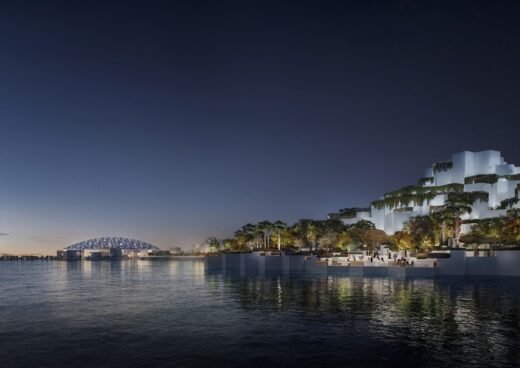
The Saadiyat Cultural District is already home to Louvre Abu Dhabi, the globally celebrated universal museum designed by Pritzker-prize winning architect Jean Nouvel, and Manarat Al Saadiyat, a cultural centre that contributes to the region’s vibrant arts scene with internationally relevant exhibitions and events, workshops and creative programming.
The Saadiyat Cultural District will soon also include the Zayed National Museum, the national museum of the UAE; Guggenheim Abu Dhabi, focusing on global Modern and Contemporary art; and the Abrahamic Family House, which will comprise three religious spaces in one place – a mosque, a synagogue and a church – to inspire and nurture acceptance and peaceful coexistence among people of all faiths.
Mecanoo
Architects: Mecanoo – https://www.mecanoo.nl/
Images: RedVortex
Natural History Museum Abu Dhabi, UAE images / information received 310322 from Mecanoo architecten, NL
Location: https://en.wikipedia.org/wiki/Abu_Dhabi, United Arab Emirates, Persian Gulf, the Middle East, southwestern Asia.
Architecture in Abu Dhabi
Contemporary Architecture in Abu Dhabi, UAE
Abu Dhabi Architecture News – latest building updates
Abu Dhabi Building News
Pixel Abu Dhabi by MVRDV, apartments property, Makers District, Abu Dhabi, UAE
Design: MVRDV, The Netherlands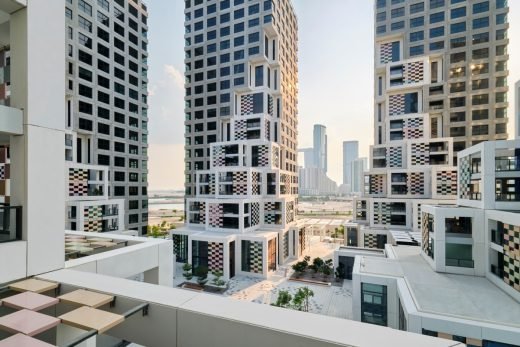
photo © Jon Wallis
Abrahamic Family House in Abu Dhabi, Saadiyat Island
Design: Sir David Adjaye Architect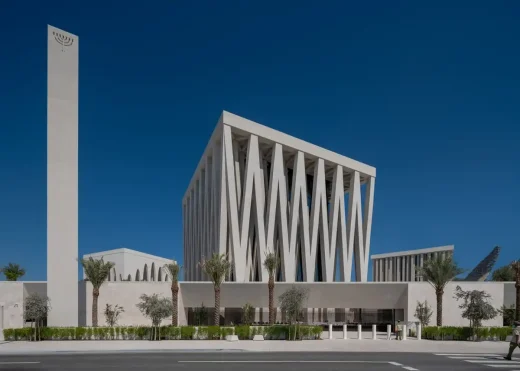
photo : Deed Studio.UAE
New Miral Abu Dhabi Headquarters
+++
UAE Architectural Designs
Dubai Architecture Designs – chronological list
Dubai Building News
Abu Dhabi Architects
Comments / photos for the Natural History Museum, Abu Dhabi UAE designed by Mecanoo architecten page welcome