Moncur House, Woollahra, NSW real estate, Australian Interior, architecture photos
Moncur House in Woollahra, Sydney
4 May 2026
Architects: Modify Homes
Location: Woollahra, NSW, Australia
Photos: Katherine Lu
Moncur House, NSW, Australia
A wide Victorian terrace in Woollahra, Sydney reimagined as a refined city retreat. The Moncur Housebrief to Modify was to renovate and refresh a home that had remained largely untouched for many years—modernising finishes, improving natural light, and creating a more effortless, easy-living environment.
The clients, who primarily reside on a rural property, wanted a comfortable and considered city bolt hole. A key requirement was to enhance parking, capitalising on the rare opportunity for double off-street spaces in the heart of Woollahra, while carefully concealing the presence of larger vehicles from the rear living and kitchen areas.
The design also needed to support flexible family living, with bedrooms and bathrooms for both children, alongside a welcoming space for guests. Importantly, the home was to embrace its location—within walking distance to Centennial Park, local restaurants and shops—offering a calm and connected urban haven that balances heritage character with contemporary ease.
Through careful reconfiguration by the design and build team, the home was opened to a full-width rear extension, introducing light-filled kitchen, living and dining spaces connected to a central courtyard. Original features were retained and restored, while new elements—crafted in brick, concrete and natural materials—bring depth and unique touches to the design.
What was the client’s brief/project scope?
Moncur House is a wide Victorian terrace in Woollahra, reimagined as a refined and functional city retreat. The brief to Modify was to renovate and refresh a home that had remained largely untouched for many years—modernising finishes, improving natural light, and creating a more effortless, easy-living environment.
The clients, who primarily reside on a rural property, wanted a comfortable and considered city base to return to between travels. A key requirement was to enhance parking, capitalising on the rare opportunity for double off-street spaces in the heart of Woollahra, while carefully concealing the presence of larger vehicles from the rear living and kitchen areas.
The design also needed to support flexible family living, with dedicated bedrooms and bathrooms for both children, alongside a welcoming space for guests. Just as importantly, the home was to embrace its location—within walking distance to Centennial Park, local restaurants and shops—offering a calm and connected urban haven that balances heritage character with contemporary ease.
How did Modify respond to the brief?
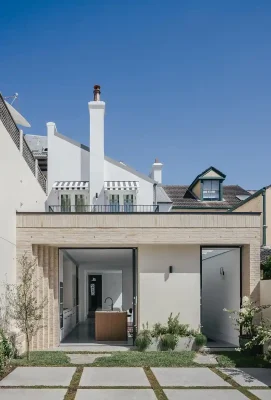
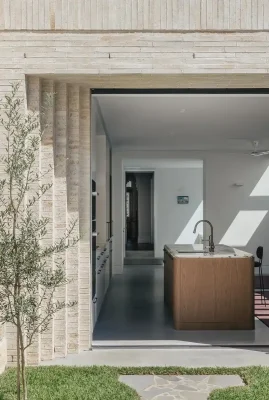
Our response focused on creating a series of carefully framed spaces that balance openness with privacy. Rather than fully opening the rear of the terrace, we introduced two blade walls to flank the kitchen and living area. This allowed the full height windows to disappear entirely when open, creating the feeling of an outdoor room while maintaining a sense of enclosure. The approach also enabled oblique views to curated landscaped moments, subtly screening the outlook to parked cars.
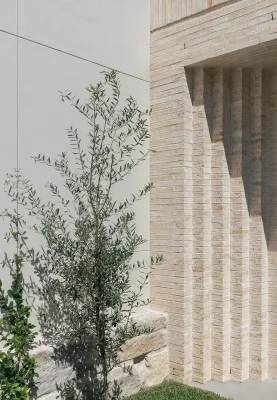
Particular attention was given to the materiality and form at the rear, as both the extension and garage terminate key sightlines. The garage was expressed through corbelled brickwork and board-formed off-form concrete, while the rear façade continues this language with detailed brick corbelling—elements that reveal themselves as you move through the ground floor.
The private areas of the first floor were also carefully replanned to improve functionality and amenity. This included the addition of a generous upstairs laundry, a large master ensuite with bath, and a second bedroom with its own ensuite, alongside a considered refresh of finishes and lighting selections throughout.
Upstairs, the attic was converted into a third bedroom with an ensuite, ensuring each child has their own private space. The design process became a true family collaboration, with each member actively involved in shaping their own room—allowing individual personalities to be reflected within a cohesive, considered home.
Were there any design or construction challenges?
As with many heritage terraces that have evolved over time, the house presented several complexities that required careful planning and coordination. On the ground floor, the existing structure sat across several different levels, with a mix of timber and concrete floors resulting from previous additions. These needed to be carefully removed and reworked to allow for a new, level concrete slab.
Access to the site also presented logistical challenges. The house sits on a busy street in a residential area, adjacent to a pub and roundabout, with limited parking and restricted site access. Coordinating deliveries, trades and construction works required careful scheduling to minimise disruption.
The rear façade introduced further complexity due to the use of handmade Krause Emperor Ghost elongated bricks. Artisanal crafted from natural clay, each brick carries subtle variations in size, tone and texture. While this creates a rich and beautiful finish, it also requires a slower, more considered installation process. One of the most challenging elements was laying the bricks to the external ceiling above the steel doors. These needed to be securely fixed while ensuring all fixings remained completely concealed. Achieving this required the team to source a specialised tool and develop a custom installation method. The concealed window head and the alignment of multiple materials and head heights also demanded precise framing and detailing.
The installation of the large skylight above the new living area was another delicate operation. A crane was required to lift the skylight into position, which meant temporarily closing the rear lane to traffic during installation.
Additional technical challenges included achieving the required performance outcomes for the new attic dormer window, as well as coordinating trades within the compact powder room—where only one trade could comfortably work at a time.
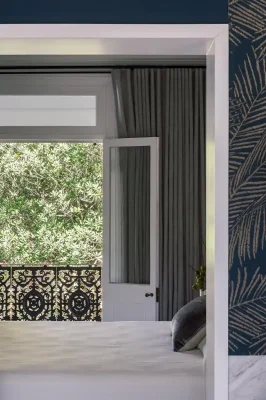
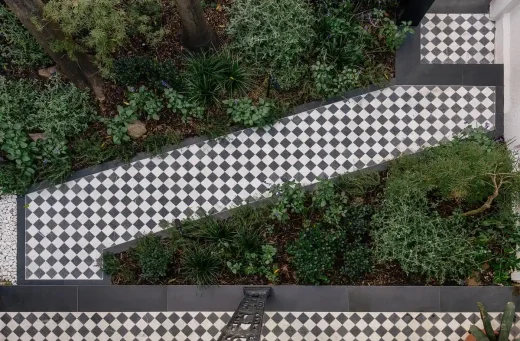
Externally, the hand-tumbled stone tiles used for the front entrance, garden path and the upstairs verandah off the master bedroom required a slower installation process. Each tile was individually sealed and carefully laid by hand, resulting in a beautifully crafted finish.
While these challenges added complexity to the build, none were insurmountable.
Were there any sustainability considerations?
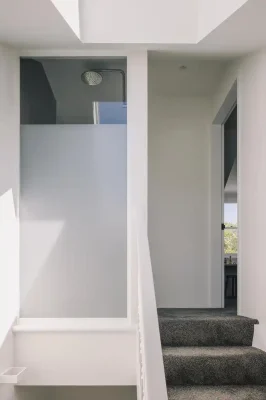
Sustainability was embedded in the design through a focus on passive performance, material longevity and energy efficiency. The home’s east–west orientation allows for abundant natural light throughout the day, significantly reducing the need for artificial lighting. This was further enhanced through the introduction of a large full-length skylight over the living area and an additional skylight above the staircase, bringing daylight deep into the centre of the home.
Natural ventilation was a key driver of the design. A central courtyard connects the heritage portion of the house to the new extension, enabling the rear of the terrace to open up and function as an outdoor room. Together with carefully positioned openings, this creates effective cross ventilation, reducing reliance on mechanical heating and cooling.
The project also incorporated several energy-efficient upgrades. Solar panels were installed for on-site energy generation, and hot water was transitioned to an efficient electric heat pump system. In line with this approach, gas was fully removed from the home. All new windows were double glazed to improve thermal performance and comfort.
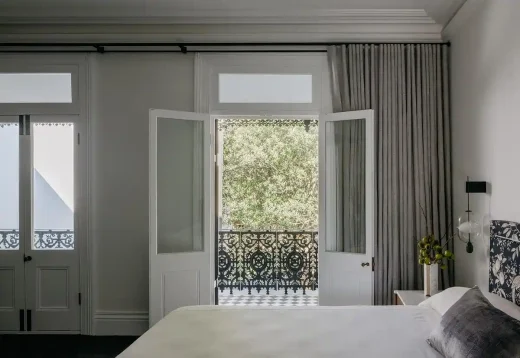
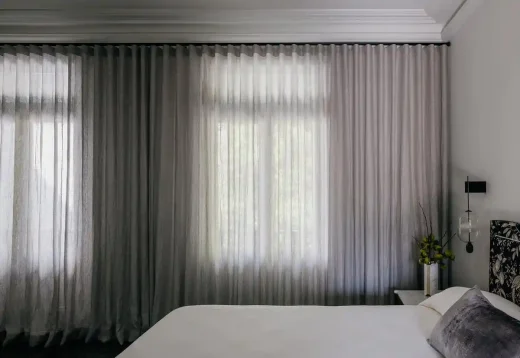
Material selection played an important role in the home’s sustainability. Durable, high-quality finishes—including natural stone, handmade tiles, full length lined curtains —were chosen for their longevity and reduced need for replacement over time. Wherever possible, original features such as windows, doors, hardwood floors, the staircase, dining room doors and fireplace were retained and restored, preserving the embodied energy of the existing structure.
The result is a home that feels inherently comfortable and connected —something the clients noted immediately, remarking on the abundance of natural light and the overall sense of openness achieved throughout the house.
What is the creative directors favourite design feature within the project?
There are several moments within Moncur House that feel particularly special. The rear composition stands out, where board-formed concrete is paired with Australian handmade Krause bricks to the garage, and corbelled brickwork frames the steel doors to the casual living area. This layered detailing adds depth and texture, celebrating craftsmanship while creating a strong visual connection to the view. Internally, the widened outlook enhances the connection between spaces and allows the rear to feel open, light-filled and expansive.
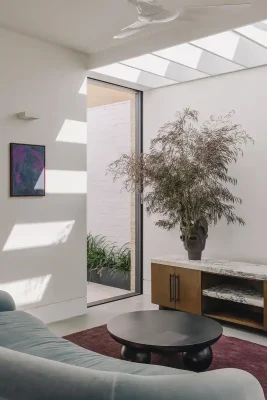
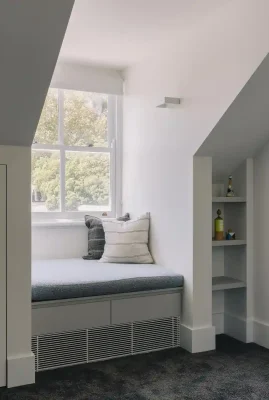
We also love the more intimate moments—like the reading nook with its concrete seat, full-height sliding window and direct access to a private courtyard, forming a quiet suntrap. In the attic, a full-height window to the ensuite shower borrows light from the main roof skylight while capturing elevated views across the Woollahra rooftops.
Elsewhere, the powder room introduces a playful moment of surprise, with richly layered tiles, natural stone and bronze finishes with bold wallpaper pattern. The addition of a verandah off the upper-level captures beautiful light and outlook.
Finally, the restored front façade and reimagined garden complete the home, allowing it to sit comfortably and confidently within its streetscape.
How did Modify thoughtfully design and reconfigure the heritage house for modern living?
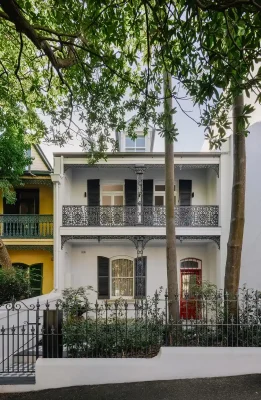
The reconfiguration of Moncur House was driven by a careful balance between preserving heritage character and enabling a more functional, contemporary way of living. At the front, traditional formal living and dining rooms were retained and restored, including the original staircase—now paired with a discreet wine cellar beneath—maintaining the home’s sense of history and arrival.
To the rear, the house was extended to the full width of the block, creating generous kitchen, living and dining spaces that open seamlessly to a private central courtyard. This area forms the heart of the home, complete with underfloor heating and improved natural light through the introduction of a full length skylight. The redesign also allowed for practical considerations, including accommodating two large vehicles in a dense inner-city setting.
Upstairs, the floorplan was reworked with the laundry relocated to the first floor for ease of access, while a new generous master ensuite with bath and shower added, and a second bedroom with its own ensuite and verandah. The attic was transformed into a third bedroom with ensuite, maximising previously unused space.
Throughout, bespoke joinery and thoughtful planning ensure the home is both highly functional and deeply considered.
Describe the palette and intent behind the finishes selection?
The finishes palette for Moncur House was guided by a desire for durability, ease of maintenance and a sense of individuality. As a secondary residence, the brief called for robust materials that would age gracefully over time. This led to the use of unpainted brickwork and concrete flooring, creating a low-maintenance base to the home. Layered over this, the interiors reflect the clients’ eclectic taste, with each space expressing its own personality. The bathrooms, in particular, were designed as distinct moments—the master ensuite adopts a moody, refined palette, while the first-floor bathroom introduces a more playful, colourful approach. The attic ensuite is light-filled and calm, completing a varied yet cohesive suite of spaces. Each family member was involved in shaping their own room, bringing a personal layer to the overall design.
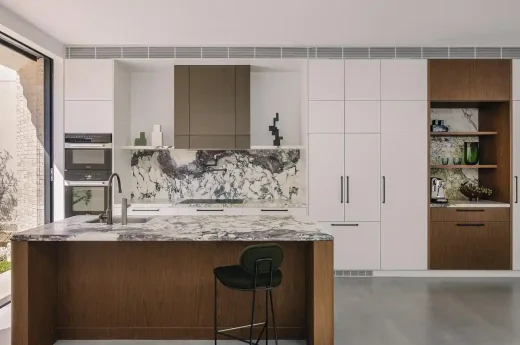
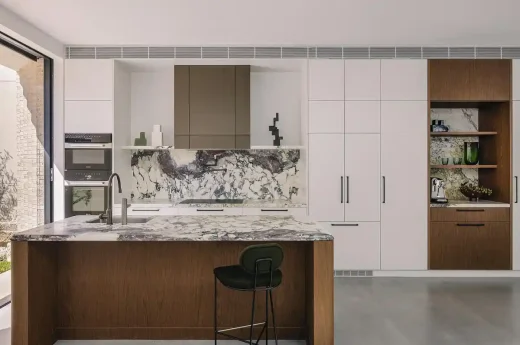
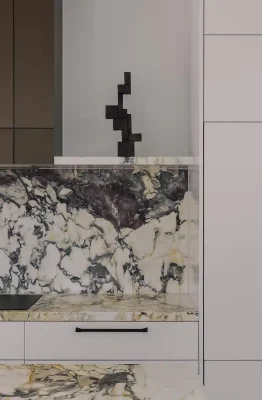
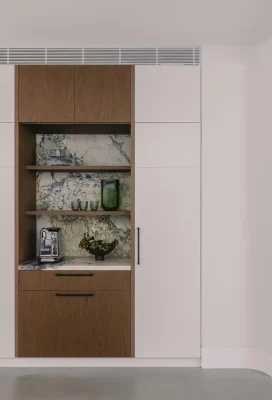
Natural stone plays a key role, particularly in the kitchen, where a characterful marble slab was hand-selected for its unique veining and connection to the wider palette. Bespoke lighting selections, bespoke integrated joinery and tactile materials add depth throughout.
Heritage references remain present in details such as the checkerboard tumbled stone tiles at the entry and the restored façade, grounding the home in its original character.
What was the client’s brief/project scope?
Moncur House is a wide Victorian terrace in Woollahra, reimagined as a refined and functional city retreat. The brief to Modify was to renovate and refresh a home that had remained largely untouched for many years—modernising finishes, improving natural light, and creating a more effortless, easy-living environment.
The clients, who primarily reside on a rural property, wanted a comfortable and considered city base to return to between travels. A key requirement was to enhance parking, capitalising on the rare opportunity for double off-street spaces in the heart of Woollahra, while carefully concealing the presence of larger vehicles from the rear living and kitchen areas.
The design also needed to support flexible family living, with dedicated bedrooms and bathrooms for both children, alongside a welcoming space for guests. Just as importantly, the home was to embrace its location—within walking distance to Centennial Park, local restaurants and shops—offering a calm and connected urban haven that balances heritage character with contemporary ease.
Moncur House in Woollahra, Sydney, Australia – Building Information
Architect: Modify Homes – https://www.modify.com.au/
Project size: 197 sqm
Site size: 204 sqm
Completion date: 2025
Building levels: 3
Photography: Katherine Lu
Moncur House, Woollahra, Sydney real estate images / information received 040526
Location: Woollahra, NSW, Australia
New Architecture in Sydney
Contemporary Sydney Buildings
Sydney Architecture Designs – chronological list
Sydney Architecture News
by e-architect
Rozelle Mixed Use Development – Balmain Leagues Club
Architects: Scott Carver
image © Scott Carver
Rozelle Mixed Use Development
Harbord Diggers Redevelopment
Architects: architectus, CHROFI and JMD design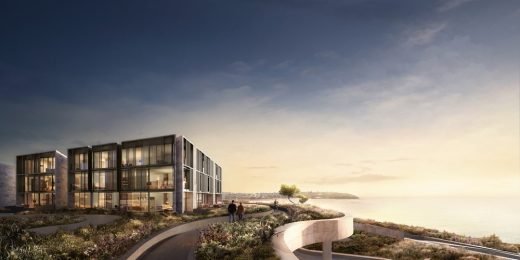
image © Bloom Images
Harbord Diggers Club Redevelopment
Architects: anthrosite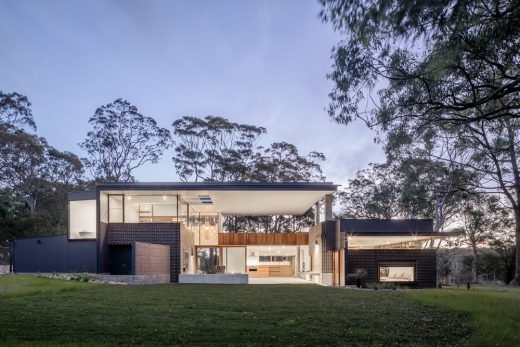
photo : Jon Reid
Contemporary House in Newcastle, NSW
Kensington Street, former Carlton & United Breweries site, Chippendale
Landscape Architects: Turf Design Studio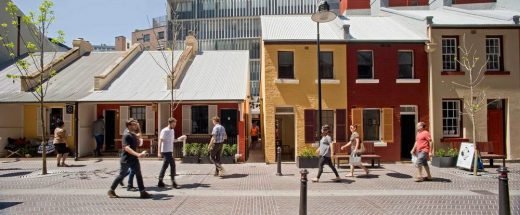
photo : Simon Wood
Kensington Street Development
Sydney Houses
Sydney Architecture
Sydney Architect Studios
Australian Architecture
Australian Houses
Comments / photos for the Moncur House, Woollahra, Sydney real estate designed by Modify Homes page welcome