ACADIA 2025
COMPUTING for RESILIENCE: Expanding Community Knowledge & Impact
November 3–8, 2025
Miami
Miami, a leading hub for cryptocurrency with its own MiamiCoin, was a fitting location to interrogate the future of computational design. There are, however, also real concerns about the city’s existential survival, as it faces significant challenges due to rising sea levels and land subsidence: It sunk as much as 3 inches between 2016 and 2023, which sets a troubling precedent for the future of the city.
If planned obsolescence exists in today’s data infused daily-lives of designers, architects, and urban planners alike, then, ACADIA 2025—hosted in the Bernard Tschumi Architects–designed complex within the Florida International University campus and the Arquitectonica-designed Thomas P. Murphy Design Studio Building at the University of Miami—felt anything but abstract. Its contents explored the very real questions of climate volatility, technological acceleration, and disciplinary responsibility.
Miami’s landscapes already contend with tidal flooding, extreme heat, and infrastructural fragility, conditions that foreground the urgency behind this year’s theme: Computing for Resilience. Yet as attendees explored the potential of AI, robotics, environmental simulation, and material computation, another paradox surfaced: The infrastructures enabling these tools—data centers, machine learning models, and global compute ecosystems—are themselves significant contributors to the next stages of climate catastrophe.
ACADIA hosted its 45th annual conference this year, with 275 attendees. Its panels, workshops, and research showcased focused on data, language learning modelling, and questions about climate. I came away with four related questions:
- How are data centers, machine learning, and user behavior accelerating environmental harm?
- What policies should guide our data needs and computational goals?
- Should we be concerned about supply-chain fragility embedded within “computing resilience”?
- Whose data—and what data languages—should shape our resilience strategies?
These questions push architects to confront the material and political stakes of computational design and to rethink what resilience actually demands.
The Environmental Cost of Computation
The environmental footprint of computation is no longer speculative; it is measurable and accelerating. Data centers—the megastructures behind everyday cloud operations—consume extraordinary quantities of electricity and water. In regions like Miami, where cooling requires more energy and the water table is rising, these facilities exacerbate existing resource vulnerabilities. Their geographic placement often mirrors patterns of infrastructural privilege, reinforcing inequities in environmental risk and environmental benefit.
On Day 1, the MATTER/Synthetic Panel, moderated by Chair Johannes Braumann, included panelists like Catherine Graubard and Daniel Kohler who presented on LLM-guided discovery. Others spoke about how data-driven 3D printing and robotic assemblies affect climate change. On Day 2, the INTELLIGENCES/Collectives panelists spoke of using LLMs and Human-AI co-design methodologies to bring together collaborative spatial design. Kohler moderated while Pedro Veloso, Jinmo Rhee, Ren Jian Lim, Rushi Dai, and others presented their research.
Machine learning introduces another layer of extraction, as training a large-scale model requires vast quantities of electricity, rare-earth elements, and continuous hardware replacement cycles. As ACADIA’s smart thematic organization around “Matter,” “Contexts,” and “Intelligences” suggested, the hybrid entanglement of humans, machines, and materials makes it impossible to separate digital innovation from environmental cost. The “intelligence” of our tools is built atop networks of energy, minerals, and labor whose impacts accumulate globally.
Architectural practice adds its own accelerants. From agent-based modeling to extended reality, to real-time robotics and digital twins, design workflows produce immense data exhaustion. We are encouraged—explicitly through software marketing and implicitly through academic culture—to compute more, simulate more, render more. Resilience becomes computationally expensive, and therefore materially expensive.
“Data centers and machine learning increase the global carbon footprint through high energy demand, intensive cooling systems, and short hardware lifecycles,” Samuele Sordi, chief architect of Pininfarina, told me after the conference. “This calls for a design shift toward energy-positive architectures, renewable integration, and low-emission, industrialized construction methods.”
What Policies Should Shape Our Data Use?
One of the most urgent questions raised throughout the conference by David Benjamin, associate professor at Columbia GSAPP, is whether architects and institutions need new policies governing the environmental implications of computation. Rather than accepting indefinite growth in data production and compute intensity, we might adopt the principle of data sufficiency—identifying what data is necessary to support design decisions and what is simply habitual excess.
Sordi commented, “Policies should assess the carbon impact of data across its entire lifecycle, promoting computational efficiency, low-carbon materials, and innovation in construction systems, ensuring that digital infrastructure and the built environment evolve in a responsible and measurable way.”
Potential policy directions include:
- Carbon disclosure requirements for computational workflows, similar to embodied carbon reporting
- Public transparency around storage lifecycles: how long data is kept, where it is stored, and at what environmental cost
- Environmental impact assessments for high-compute projects—especially ones that require ongoing simulation or cloud infrastructure
- Incentives or restrictions on water-intensive cooling operations for data centers in climate-stressed regions
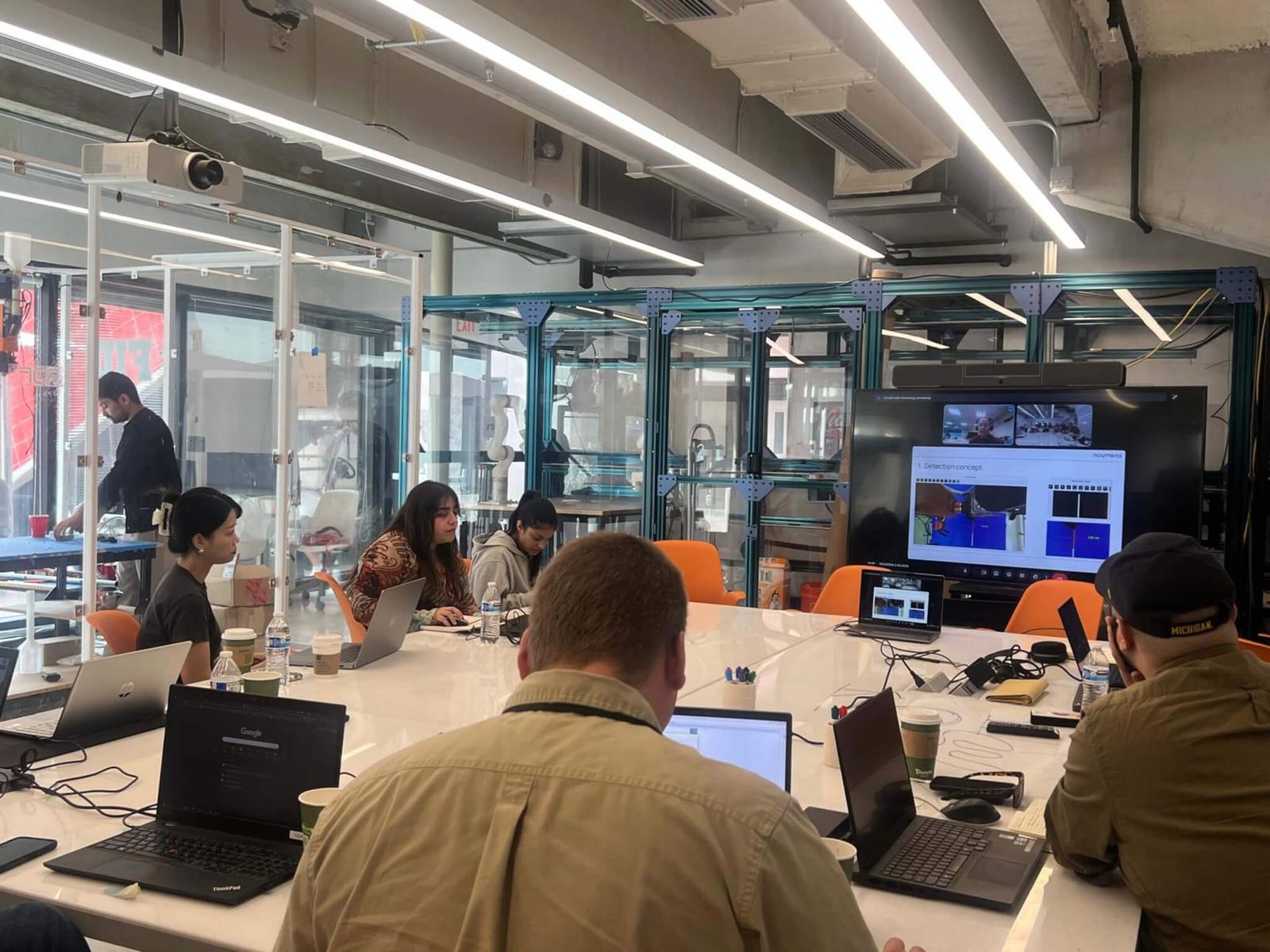
ACADIA’s workshops—particularly those on environmental simulation, adaptive skin design, AI as cultural technique, and robotic fabrication—demonstrated that computational tools can meaningfully support climate adaptation. The workshops were often abstract in concept but realistic in terms of applied research.
The most impressive aspect of the workshops was the progressive and realistic applications of real-world research that is currently being developed within the FIU CASE FIU Robotics And Digital Fabrication Lab, founded and led by ACADIA president Biayna Bogosian and FIU director and professor Shahin Vassigh. These workshops tackled how the discipline of architecture must also confront the resource intensity behind these tools and build regulatory frameworks that treat data as a scarce material.
The Fragile Supply Chains Behind Resilience Infrastructure
A second key issue surfaced throughout the conference: the dependency of computational design on globalized, fragile supply chains. Chip fabrication facilities, lithium ion batteries, rare-earth magnets, thermal interface materials, and industrial robotics are all part of the infrastructure that makes computational resilience possible. Yet these systems are vulnerable to geopolitical instability, mineral scarcity, transport risk, and climate disruption.
If architectural resilience is built atop the assumption of uninterrupted access to computational hardware, then resilience is not resilient; it is contingent.
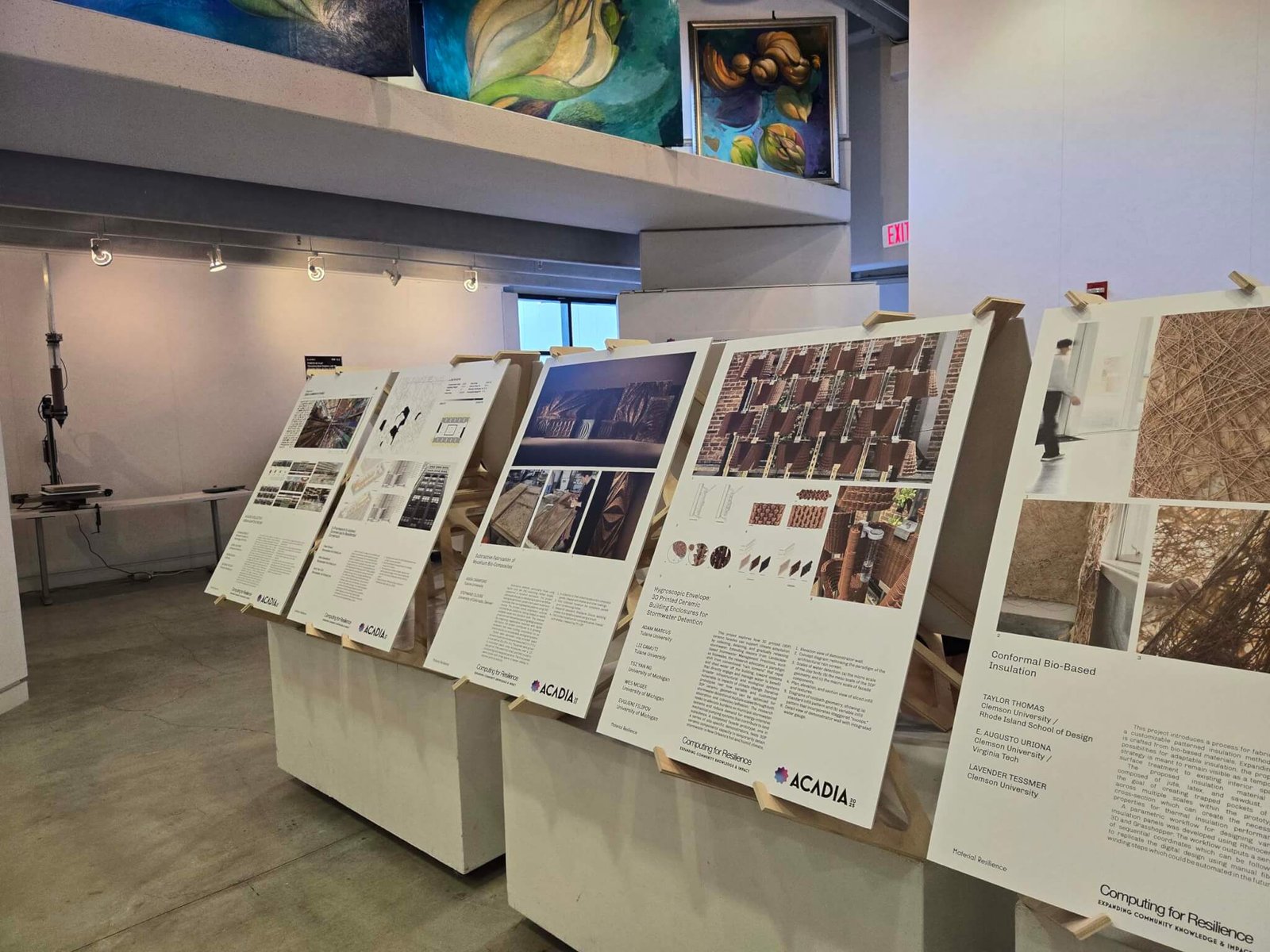
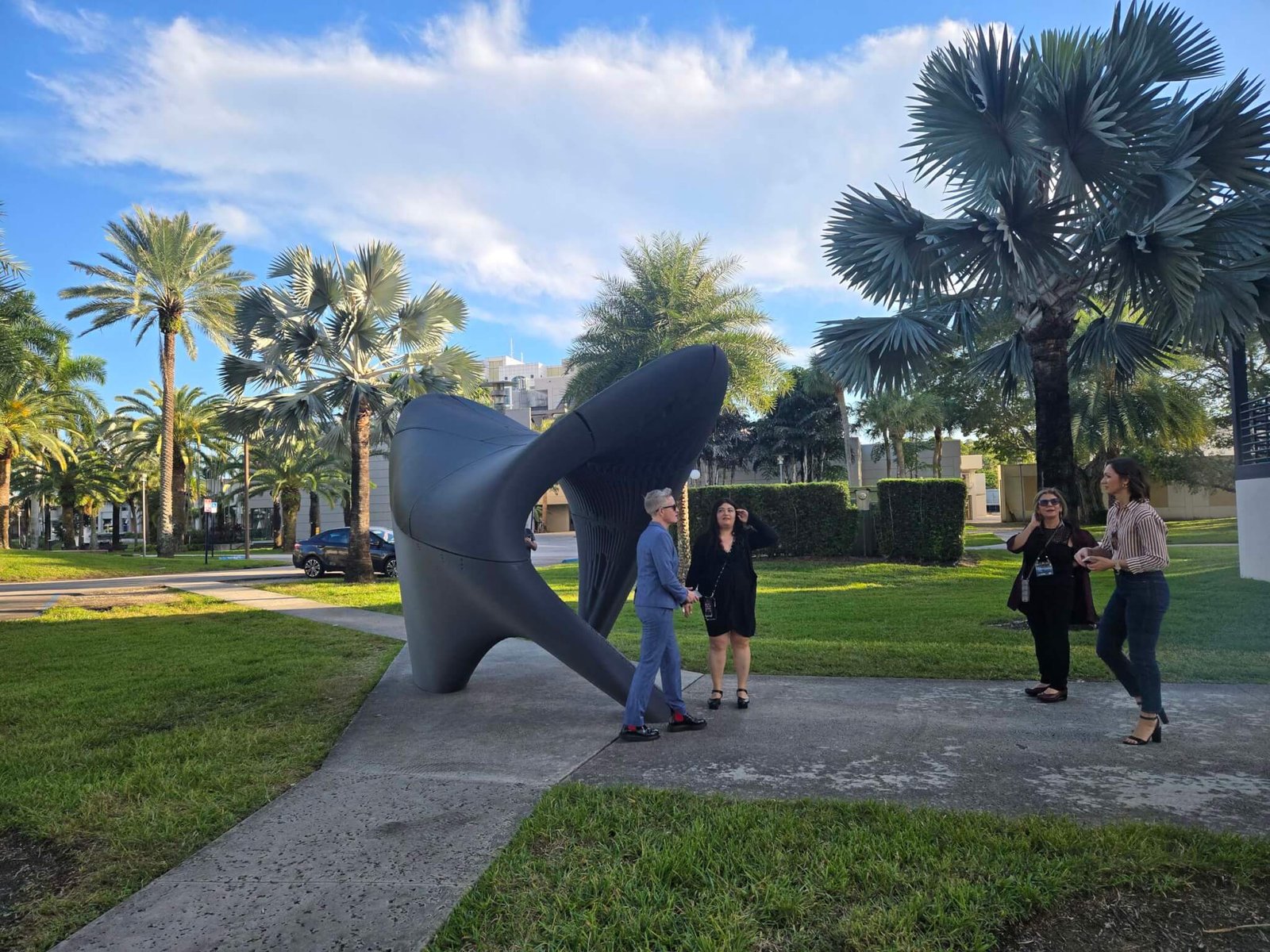
ACADIA’s informative exhibitions and workshops offered alternative pathways. The Circular Brick workshop, led by Dinorah Martínez Schulte, Alex Schofield, and Teri Watson, used sargassum seaweed, a regional environmental burden, as a circular material input. Forces in Clay, led by Ali Tabatabaie Ghomi and Yoana Taseva, and other material-driven sessions proposed fabrication strategies that rely on low-impact matter rather than high-impact hardware. Even the DUAL installation, manufactured and 3D printed onsite in Miami by Pininfarina produced from recycled tire material, pointed toward supply chains grounded in reuse. These projects collectively challenge the assumption that advanced computation necessitates advanced extraction.
Data Languages, Knowledge Systems, and the Question of Whose Resilience
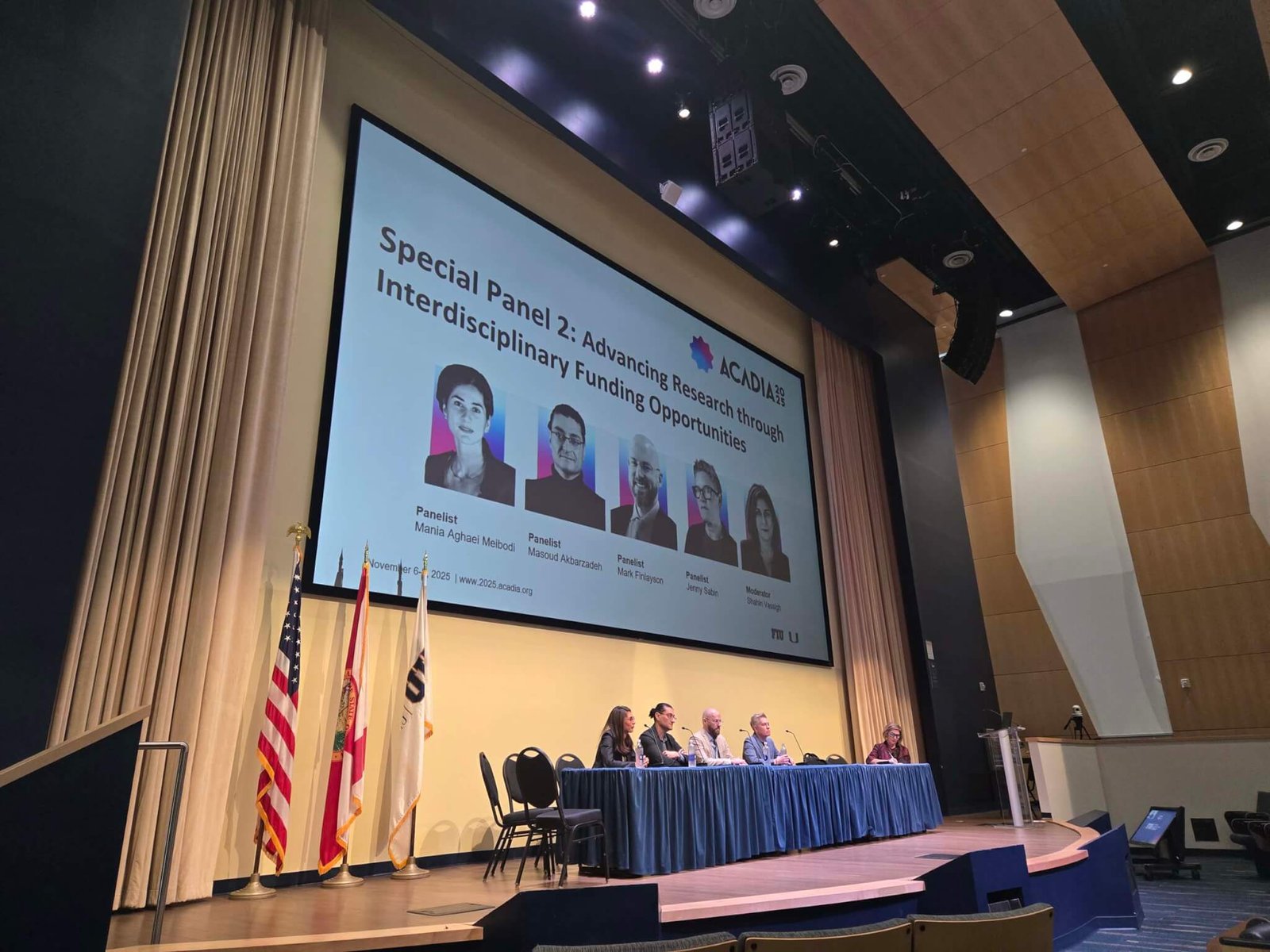
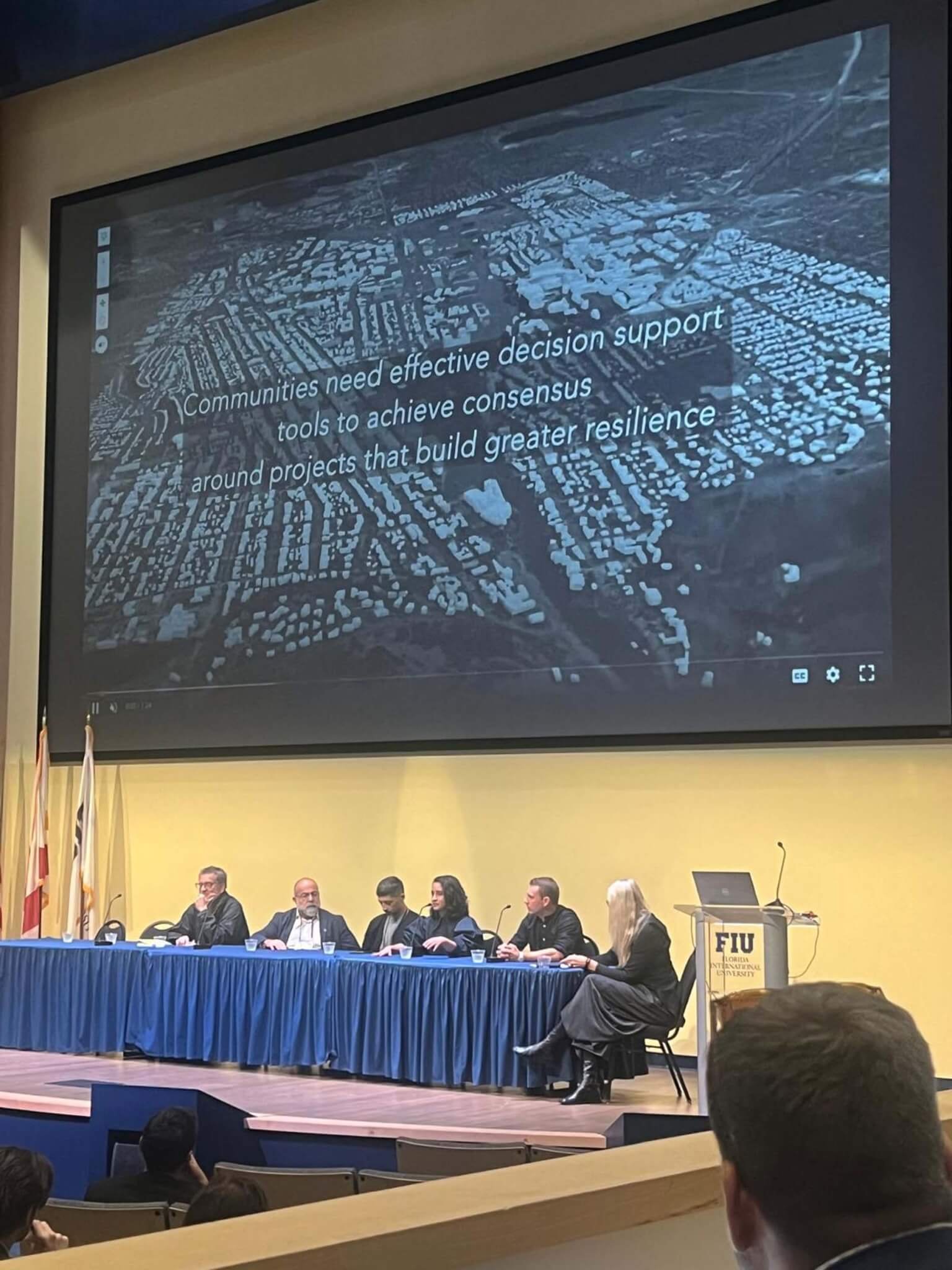
The closing panel at ACADIA, chaired by Vassigh with participation from Jenny Sabin, Mania Aghaei Meibodi, Mark Finlayson, and Masoud Akbarzadeh, underscored the need for inclusive, multilayered knowledge systems in computational design. This resulted in a dynamic discussion about advancing research through interdisciplinary funding opportunities through collaborative partnerships and interactive cross-disciplinary networks.
Resilience is not a universal metric; it is contextual, cultural, and political. Yet many of the data languages embedded in our tools are built on Western scientific frameworks, proprietary climate models, or incomplete geospatial datasets. These often exclude the lived experience, traditional knowledge, and informal infrastructures of marginalized communities most affected by climate change.
Machine learning models inherit the biases of the datasets that shape them. If those datasets omit certain communities, environmental histories, or vernacular knowledge systems, then the resulting models produce partial and inequitable predictions. This gap becomes especially problematic when computational outputs are used to guide real-world resilience planning.
To compute for resilience, we must do so across knowledge systems. That includes:
- Open data infrastructures that incorporate community-generated or Indigenous datasets
- Tools designed to handle qualitative, narrative, or embodied forms of environmental knowledge
- Processes that make space for public co-creation, not just public consultation
ACADIA’s emphasis on “contexts” and “intelligences” helps designers to reframe computation as relational: Intelligence emerges not from the machine alone but from interactions among design tools, materials, climatic forces, and social actors.
Designing a Discipline that Computes Within Limits
Looking ahead, architects, educators, and policymakers must collectively recalibrate the fields of architecture, urban design and planning, design, and computational ambitions.
After attending ACADIA 2025, here are some suggestions for practitioners:
- Include computational and storage budgets in project proposals
- Audit data generation as carefully as material waste
- Seek low-impact or circular workflows as defaults, not special exceptions
- Incentivize water management systems that give-back to communities that data storage and centers are taking away from
And for institutions:
- Integrate environmental compute literacy into architectural education
- Require carbon accounting for digital fabrication and AI-intensive research
- Support open-source and lightweight tools that reduce reliance on heavy cloud infrastructure
And policymakers:
- Regulate data centers in water- and heat-stressed regions
- Incentivize renewable energy–powered computation
- Require transparent reporting across computational and material supply chains
These steps would move the discipline from unchecked technological acceleration toward intentional, situated, and equitable computational practice that would also focus on equitably building communities for humans who live within them.
This tracks with advice from experts at ACADIA. Kathy Velikov, Associate Dean for Research and Creative Practice and Professor of Architecture at the Taubman College of Architecture and Urban Planning, University of Michigan, told me that “a major concern for climate action and environmental justice is the current lack of regulatory oversight in data center development and energy grid expansion to meet the demands of the massive compute power that is exponentially rising.”
Resilience Requires Computing Less, Not More
The climate crisis cannot be outcomputed. Resilience will not emerge from increasingly intensive simulations, bigger datasets, or faster models. Instead, it requires confronting the material realities of computation and developing design cultures that compute with purpose, not by default.
ACADIA 2025 offered a glimpse into this future—one where computational innovation is matched by computational restraint and emotional intelligence.
To design for resilience, we must compute while critically challenging its limits and, at the same time, not work beyond them.
Wendy W Fok is a designer, researcher, and practitioner. Their research explores the ethical and equitable design of data, culture, and community in both digital and physical infrastructures, more questions can be found in their book, digitalSTRUCTURES: Data and Urban Strategies of the Civic Futures. Their collaborative design-practice uses advanced and emerging technologies for underserved community-driven design projects, especially with cultural institutions and non-profit organizations, paired with clients in the real-estate developments, entertainment, retail, and hospitality sectors. They have taught at Columbia GSAPP, Harvard GSD, and the Architectural Association, to name a few schools. Visit their website to learn more about their work and research: wendywfok.com.
Nguồn: archpaper.com